

Operating a port crane spreader safely is of paramount importance in the bustling world of port operations. As a leading supplier of port crane spreaders, I understand the critical role these devices play in the efficient and secure handling of containers. In this blog, I will share some essential guidelines and best practices on how to operate a port crane spreader safely.
Pre - operation Checks
Before starting any operation with a port crane spreader, a comprehensive pre - operation check is mandatory. This includes a visual inspection of the spreader itself. Look for any signs of physical damage such as cracks, bent parts, or loose connections. Check the locking mechanisms that secure the spreader to the container. These locks must be in perfect working condition to prevent accidental release of the container during lifting.
Inspect the electrical and hydraulic systems. Electrical components should be free from frayed wires or exposed conductors. The hydraulic hoses should not have any leaks, and the fluid levels should be within the recommended range. Malfunctions in these systems can lead to sudden failures during operation, endangering both the operators and the cargo.
Verify the alignment of the spreader. A misaligned spreader can cause uneven stress on the container and the lifting equipment, increasing the risk of tipping or dropping the load. Ensure that the spreader is centered properly over the container before attempting to engage it.
Operator Training
One of the most crucial aspects of safe port crane spreader operation is operator training. Operators should receive in - depth training on the specific model of the spreader they will be using. This training should cover not only the basic functions of the spreader but also emergency procedures.
Operators need to understand how to control the spreader's movements precisely. This includes lifting, lowering, rotating, and telescoping the spreader. They should be able to handle different types of containers, such as standard 20 - foot and 40 - foot containers, as well as high - cube and special - purpose containers.
Training should also focus on safety protocols. Operators must be aware of the maximum load capacity of the spreader and never exceed it. They should know how to respond to various emergency situations, such as power failures, hydraulic leaks, or sudden equipment malfunctions. Regular refresher courses should be provided to keep operators updated on the latest safety standards and operating techniques.
Communication
Effective communication is key to safe port crane spreader operation. There should be clear lines of communication between the crane operator, the ground personnel, and other relevant parties in the port. Ground personnel play a vital role in guiding the spreader into position and ensuring that the container is properly secured.
Radio communication systems should be used to convey instructions and information. Operators and ground personnel should use standardized communication codes to avoid misunderstandings. For example, specific signals can be used to indicate when the spreader is ready to engage, when the container is being lifted, and when it has been safely placed at its destination.
In addition to radio communication, visual signals can also be used, especially in noisy or congested areas. Ground personnel should be trained to use hand signals to communicate with the crane operator when necessary.
Load Handling
Proper load handling is essential for safe operation. When engaging the spreader with the container, make sure that the locking pins are fully inserted and locked. This can be verified through visual inspection or by using the spreader's built - in locking indicators.
During lifting, the load should be kept as stable as possible. Sudden movements or jerks can cause the container to swing, increasing the risk of collisions with other objects or structures in the port. The speed of lifting and lowering should be controlled, and the operator should avoid over - accelerating or decelerating.
When stacking containers, ensure that the stack is stable and balanced. The spreader should be positioned accurately to place the container on top of the stack without causing any tilting or shifting. This requires careful planning and precise operation of the spreader.
Maintenance and Inspection
Regular maintenance and inspection of the port crane spreader are essential for its safe and reliable operation. A maintenance schedule should be established, and all maintenance tasks should be carried out by qualified technicians.
During maintenance, components such as the locking mechanisms, hydraulic cylinders, and electrical motors should be inspected and serviced. Worn - out parts should be replaced promptly to prevent failures. Lubrication of moving parts is also crucial to reduce friction and wear.
In addition to regular maintenance, periodic inspections should be conducted by independent third - party inspectors. These inspections can identify potential safety hazards that may not be apparent during routine maintenance. The results of these inspections should be used to make any necessary repairs or improvements to the spreader.
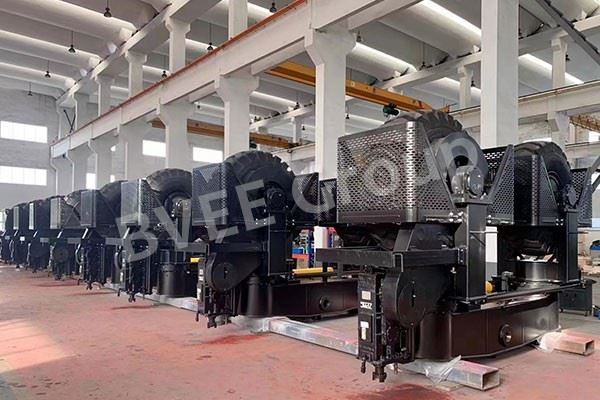

Types of Port Crane Spreaders
There are different types of port crane spreaders available, each with its own features and applications. For example, the Headblock Spreader is designed for specific lifting requirements. It offers enhanced stability and precision during container handling.
The Port Crane Spreader is a versatile option that can be used for a wide range of container sizes and weights. It is known for its durability and reliability in port operations.
Another type is the Hook Beam Spreader, which is suitable for lifting containers with non - standard lifting points. It provides flexibility in handling different types of cargo.
Conclusion
Operating a port crane spreader safely requires a combination of proper pre - operation checks, well - trained operators, effective communication, proper load handling, and regular maintenance. By following these guidelines, the risk of accidents and injuries in port operations can be significantly reduced.
If you are in the market for a high - quality port crane spreader, we are here to help. Our company offers a wide range of spreaders that are designed to meet the diverse needs of port operators. We are committed to providing not only top - notch products but also excellent after - sales service. Contact us to discuss your specific requirements and start a procurement negotiation. We look forward to working with you to enhance the safety and efficiency of your port operations.
References
- International Maritime Organization (IMO) Guidelines for Safe Port Operations
- American Society of Mechanical Engineers (ASME) Standards for Crane and Lifting Equipment
- Industry best practices from leading port operators around the world


