



Crane Rail
BVEE has accumulated many experiences in all types of handling equipment and port machinery over 20 years. BVEE provides innovative, efficient and continuous heavy bulk material treatment solutions for global customer through comparative analysis, combined with actual working conditions and professional technology. And always developing intelligent mobile material handling equipment to replace the rail stacker and traditional loading and unloading process in the yard of port terminal to improve efficiency, reducing cost, lessening pollution and helping the port industry develop in a way of efficient, energy-saving and environment friendly. BVEE also with more activities like: Fabrication and Machining Spare Parts, Maintenance and Repair service, Modification, Erection, Commissioning, Inspection, Calculation and Analysis, Dismantling and Disposal.
Our Advantages
Wide Range of Applications
Our products, such as Port Equipment Wheel, Crane Sheave, Crane Rail, Hoist Drum, Gantry Crane, Container Spreader, Crane Cabin, and Stacker Reclaimer, are widely used in the range of transporting Iron & ore, coal and etc. in various mines, ports and storage yards.
Rich Products
Our company produce a wide variety of Bulk material handling equipments and port equipment, including Port Equipment Wheel, Crane Sheave, Crane Rail, Hoist Drum, Gantry Crane, Container Spreader, Crane Cabin, and Stacker Reclaimer.
24-Hour Service
Our company promises to provide 7×24 hours service after the contract is signed. We will respond within 1 hour after receiving the message, provide solutions to general faults within 8 hours, and solve complex problems within 24 hours.
Quality Guaranteed
Our company has passed ISO quality certification system. Our company has obtained certificates such as ISO14001:2015, ISO9001:2015. All products are strictly tested in accordance with industry standards and contract agreements before leaving the factory.

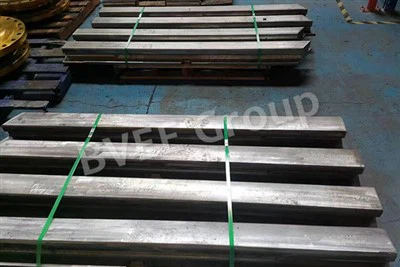


Crane rails are an essential part of any crane operation. They provide a stable, level surface for the crane to travel along, and they help to distribute the weight of the load evenly. That’s why it’s so important that they be bolted or welded into place – if they aren’t, the risk of them coming loose and causing an accident is much higher.
Advantages of Crane Rail
Greater Mobility and Accessibility
One of the significant advantages of Crane Rails is the increased mobility and accessibility they provide. Rail systems can traverse difficult terrains that traditional cranes may struggle with, from rocky landscapes to marshy grounds. In addition, Crane Rails can access remote and restricted locations, offering unmatched reach compared to standard crane services.
Increased Load Capacity
When it comes to handling weighty materials, Crane Rails stand tall. They can carry much heavier loads than their conventional counterparts due to the robust and steady nature of the rail infrastructure. This feature makes them ideal for large-scale projects that require the movement of substantial materials, thereby expediting your project’s pace.
Enhanced Safety Measures
Safety is a paramount concern in any construction or lifting project. With Crane Rails, you get an added layer of security. Rail systems provide stability, reducing the chances of accidents due to tipping or unbalanced loads. As such, they present a safe, reliable solution to your lifting needs, ensuring your project runs smoothly and securely.
Efficiency and Time Saving
Utilizing Crane Rails can significantly cut down on your project timeline. The ability to move heavier loads reduces the number of trips required, while swift mobility ensures quick and efficient transportation. This efficient operation saves time, keeping your project on schedule and reducing labor costs.
Reduced Ground Impact
Crane Rails are less disruptive to the ground surface. Unlike traditional crane services that may damage the terrain due to their weight and movement, rail cranes distribute their load evenly across the rail track, causing less ground disturbance. This aspect is particularly beneficial in sensitive environments where minimal impact is required.
Flexible Project Planning
Crane Rails provide flexibility for project planning. They can be easily integrated into existing rail networks or set up independently according to the specific requirements of a project. This adaptability makes them a convenient and reliable choice for various projects, from construction to infrastructure development.
U-Type Crane Rail:
The installation method is simple, the operation is convenient, and the base is not easily damaged. However, the bearing capacity of the U-type Crane Rail is relatively poor, and it cannot withstand excessive loads. It needs to be used with light loads and small machines.
I-Type Crane Rail:
I-type Crane Rail is a common Crane Rail material, usually made of steel. The I-type Crane Rail has a large waist area, strong bearing capacity, and good durability. Its cross-section is I-shaped, with good bending bearing capacity, suitable for small and medium-sized cranes to withstand overload working environments.
Equidistant Crane Rail:
Equidistant Crane Rail has a relatively strong bearing capacity and is more suitable for use in wider spans. In the case of smaller spans, this type of Crane Rail will be more expensive. The Crane Rail needs to be selected according to the characteristics of the working environment.


Select The Model According To The Force Mode
The force mode of the Crane Rail is divided into two types: inclined pull type and vertical force type. When selecting, you need to choose the appropriate force mode and model according to the use scenario of the crane and the weight of the object carried.
Select According To The Lifting Capacity
The load-bearing capacity of the crane rail is an important consideration in the selection. After determining the lifting capacity of the crane, select the appropriate crane rail according to the lifting capacity and use scenario.
Consider Materials And Special Requirements
In special use environments, it is necessary to select appropriate materials and models according to environmental requirements and safety requirements. For example, in a high temperature environment, high temperature resistant crane rails need to be selected to ensure the safe operation of the equipment.
Applications of Crane Rail
Railway Construction
Crane Rails are widely used in railway construction. It can be used to hoist construction materials, such as railway tracks, sleepers, turnouts, etc., and can also be used for the construction and maintenance of railway bridges, tunnels and other projects.
Subway Construction
Crane Rails also have important applications in subway construction. It can be used to hoist construction materials, such as subway tracks, tunnel linings, steel beams, etc., and can also be used for the construction and maintenance of buildings such as subway stations and ventilation shafts.
Tram Construction
Crane Rails also have important applications in tram construction. It can be used to hoist construction materials, such as tram tracks, sleepers, turnouts, etc., and can also be used for the construction and maintenance of buildings such as tram stations and garages.
Rail Transportation Maintenance
Crane Rails also have important applications in rail transportation maintenance. It can be used for the inspection, maintenance and cleaning of rail transportation facilities, such as railways, subways, trams, etc., and can also be used for the demolition and cleaning of rail transportation facilities.
Installation Methods Of Crane Rail
Crane Rail Clip Fixing
The adjustable clip designs facilitate only the precise alignment of rails. The design of clips also helps to carry high-end forces on the cranes on the rails. While specific types need bolting, the others need welding. The self-locking rail clips have the design to align and safely fix the rails. To prevent excessive movement, attaching the elastomer nose for rail support can help.
Hook Bolt Fixing
Crane rail hook bolts are generally used to install the rails of the gantry cranes. While one end is connected to the rail with the help of a nut, the other end remains constant on the H beam with a hook. With the hook on either side, you can let the guide rail get easily fixed across the H beam. This method of fixing adopts a light rail generally, while the lifting rail is frequently used to weld rail clamps and bolt clamps.
Welding & Bolt Joint Fixing
The mechanical fasteners of the present are usually bolts, however, the earlier structures might include rivets. Such circumstances can occur in the case of repair, retrofit, and strengthening of projects. The new construction requires welds and bolts to function together in connections. Here, the materials getting connected are initially secured using the bolts and further welded to gain a complete connection strength.
Precautions For Setting Up Crane Rail
Determine the installation location and height of the Crane Rails according to the size and layout of the actual working area. Make sure that the Crane Rails can cover the entire working area and maintain an appropriate distance from other equipment and structures.
The fixing of the Crane Rails is very important. Use appropriate fixing devices, such as expansion bolts or welding, to firmly install the Crane Rails on the ground or other supporting structures. Make sure that the tracks are firmly fixed and will not loosen or shift.
During the installation process, carefully perform horizontal calibration. Use tools such as a level to ensure that the Crane Rails are installed smoothly on a horizontal surface. This can improve the running stability and accuracy of the gantry crane on the Crane Rails.
In the setting of the Crane Rails, consider the installation of safety protection devices. For example, install anti-skid devices to prevent the gantry crane from sliding on the Crane Rails, or install anti-collision devices to avoid collisions with other objects. These safety devices can reduce the risk of accidents and protect the safety of personnel and equipment.
Certificate
