

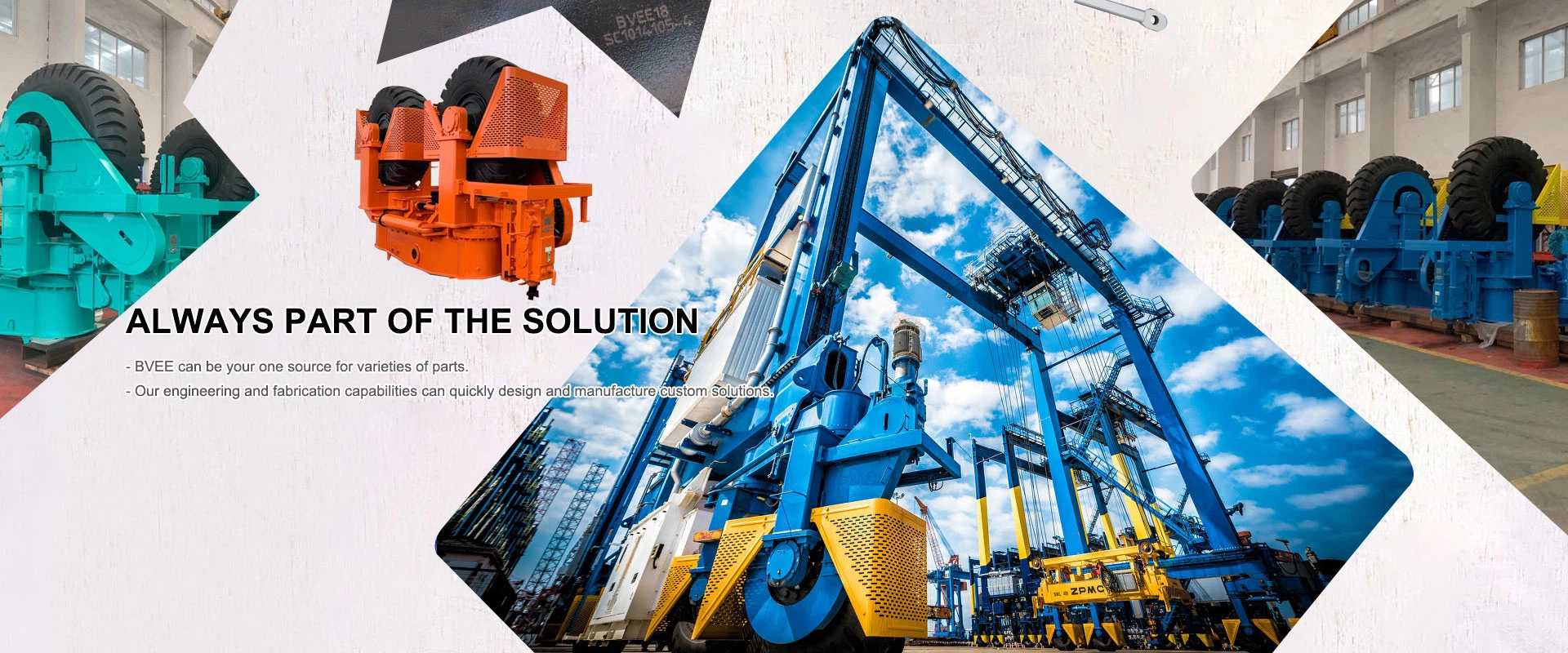


Gantry Crane
BVEE has accumulated many experiences in all types of handling equipment and port machinery over 20 years. BVEE provides innovative, efficient and continuous heavy bulk material treatment solutions for global customer through comparative analysis, combined with actual working conditions and professional technology. And always developing intelligent mobile material handling equipment to replace the rail stacker and traditional loading and unloading process in the yard of port terminal to improve efficiency, reducing cost, lessening pollution and helping the port industry develop in a way of efficient, energy-saving and environment friendly. BVEE also with more activities like: Fabrication and Machining Spare Parts, Maintenance and Repair service, Modification, Erection, Commissioning, Inspection, Calculation and Analysis, Dismantling and Disposal.
Our Advantages
Wide Range of Applications
Our products, such as Port Equipment Wheel, Crane Sheave, Crane Rail, Hoist Drum, Gantry Crane, Container Spreader, Crane Cabin, and Stacker Reclaimer, are widely used in the range of transporting Iron & ore, coal and etc. in various mines, ports and storage yards.
Rich Products
Our company produce a wide variety of Bulk material handling equipments and port equipment, including Port Equipment Wheel, Crane Sheave, Crane Rail, Hoist Drum, Gantry Crane, Container Spreader, Crane Cabin, and Stacker Reclaimer.
24-Hour Service
Our company promises to provide 7×24 hours service after the contract is signed. We will respond within 1 hour after receiving the message, provide solutions to general faults within 8 hours, and solve complex problems within 24 hours.
Quality Guaranteed
Our company has passed ISO quality certification system. Our company has obtained certificates such as ISO14001:2015, ISO9001:2015. All products are strictly tested in accordance with industry standards and contract agreements before leaving the factory.
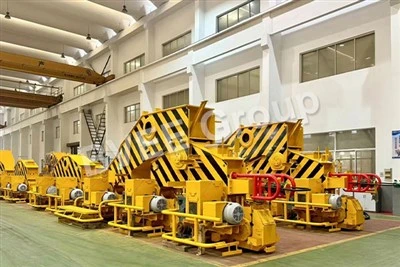


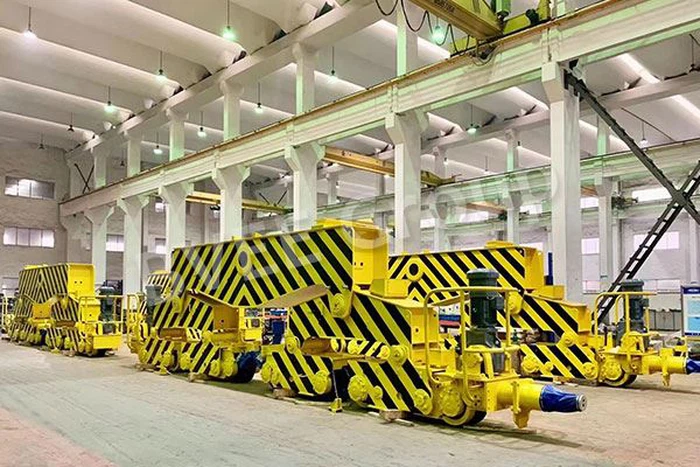
A gantry crane is a type of overhead crane with legs that support its bridge, trolley, and hoist. Larger gantry systems can travel on rail or track embedded in the ground, typically running in a straight line or covering a work area. Smaller gantry systems run on wheels or casters that can move throughout a facility for light fabrication work or maintenance. A gantry crane is typically used for outdoor applications or lifting materials below existing overhead bridge crane systems. Manufacturing facilities, shipyards, scrap yards, railyards, special construction sites, steel mills, and other applications all use gantry cranes.
Versatility
Due to its versatile nature, upkeeping your warehouse is made simpler with a gantry crane. It has a broad reach, multi-purpose lifting, simple height and span adjustments, and a lifting capacity of up to 40,000 lbs. Gantry cranes are also customizable and can position loads to any adjustable height. Selecting the correct crane for your facility is painless as many different gantry crane configurations are available to fit your needs.
Mobility
With wheels attached to the bottom, gantry cranes can easily carry goods from one location to another and are often used for an individual workstation in varying environments. Since it doesn’t need a permanent installation, the crane can be easily stored away. This ties into any issues regarding warehouse space as it can be safely kept aside when not in use, rolled out into a workstation, and lifted within seconds when desired.
Improved Safety
Gantry Cranes are very mobile and don’t require extended force or unsafe maneuvers when manipulating materials, improving workstation flow and safety. The potential for maximizing reliability and efficiency is also substantial as warehousing space is more prominent. With more space available, employees can maneuver around the facility safely.
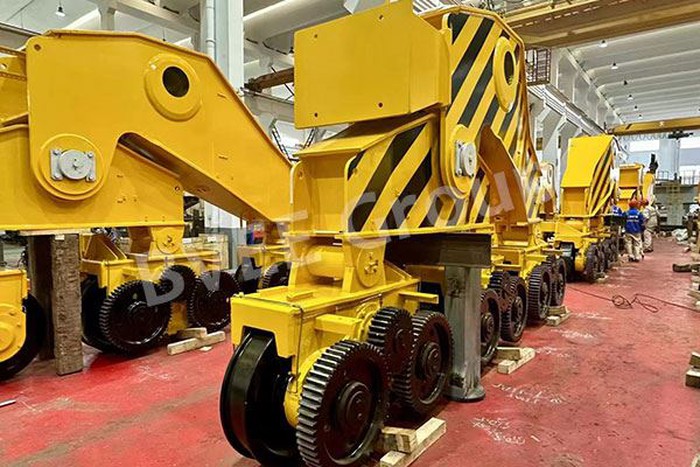
Types Of Gantry Crane
Full Gantry Crane
The full gantry crane is the normal configuration of a gantry crane with a cross beam, legs, and hoist, which can run on wheels, rails, or a track. They can be mobile and portable depending on their size.
Semi Gantry Crane
A semi-gantry crane has one leg and uses a wall mounted I beam to support the other side of the crane. The composition of a semi-gantry crane includes a bridge, crane mechanism, trolley, and hoist. Semi-gantry cranes are a combination of overhead and gantry cranes and are installed indoors and outdoors. In many cases, they are installed below an overhead crane to increase work efficiency without interfering with the operation of the overhead crane.
Portable Gantry Crane
Portable gantry cranes are light weight and mounted on rubber wheels or casters. They have a lifting capacity of a half a ton up to five tons and come in varying heights and spans. Portable gantry cranes are an economical solution for infrequent lifting problems but have the same efficiency as a permanent crane. They can be moved to any location in a facility to lift or place materials.
Adjustable Gantry Crane
There are several varieties of adjustable cranes, which can be portable or fixed. They can have their height, width, and horizontal beam adjusted to meet the needs of a load. The benefits of an adjustable crane are their flexibility and convenience. Though small adjustable gantry cranes are common, larger permanent single girder types are available. Many gantry cranes, regardless of type, have aspects and characteristics that are adjustable.
Single Girder Gantry Crane
A single girder gantry crane has one bridge beam with a hoist trolley that runs on the lower portion of the crane. The components of a single girder crane include the main beam, support legs, cross beam, crane drive, controls, and hoist. They can be configured as semi or two leg gantry cranes and can be adapted to fit the working conditions.
Double Girder Gantry Crane
A double girder gantry crane has two girder beams that make up the bridge. It can have a top running or under running trolley and is designed for extremely heavy duty applications. Double girder gantry cranes have a strong bearing capacity, large span, and excellent stability. The lifting capacity of a double girder gantry crane can reach hundreds of tons, and this type can be semi or two leg designed with A frame legs.
Truss Gantry Crane
A truss gantry crane refers to the type of girder, legs, and cross beams of the crane that are made from connected shafts. The trolley runs on top of the truss girder and may have a driver‘s cabin. Truss gantry cranes are light weight with small wheel pressure. They have a lifting capacity of five to one hundred tons and come in different lifting heights and spans.
Box Gantry Crane
A box gantry crane has a four sided box as the crane bridge. The hoist trolley is attached to the bottom of the box. The design of box girder gantry cranes allows them to have a longer bridge span and greater load capacity. They can be single or double box with the double box design being used for extraordinarily heavy duty lifting. Box gantry cranes are normally installed where the installation of an overhead crane is not possible. The box style girder is mounted onto A-frame columns that rest on heavy duty wheels.
L Shaped Gantry Crane
The L shaped gantry crane is a single beam crane with L shaped legs. The design of the L shaped gantry crane legs makes it capable of handling long pieces. It is used in freight yards, railroad terminals, and warehouses. The load capacity of an L shaped gantry crane ranges between five and fifty tons, with light dead weight and small wheel pressure. It can be designed with a soft start for long travel operations; this ensures stable and smooth movement.
U Shape Gantry Crane
A U shaped gantry crane is a form of double girder gantry crane with the support legs in the shape of a "U." The U shape design creates extra space between the legs and the double girders, which makes the design suitable for lifting large loads. The trolley fits between the two girders and can have one or two hoists. Additionally, the girders can be outreached on one or both sides to form cantilevers for the ease of loading and unloading on the cantilevers. U shaped gantry cranes can run on fixed rails with low running resistance.
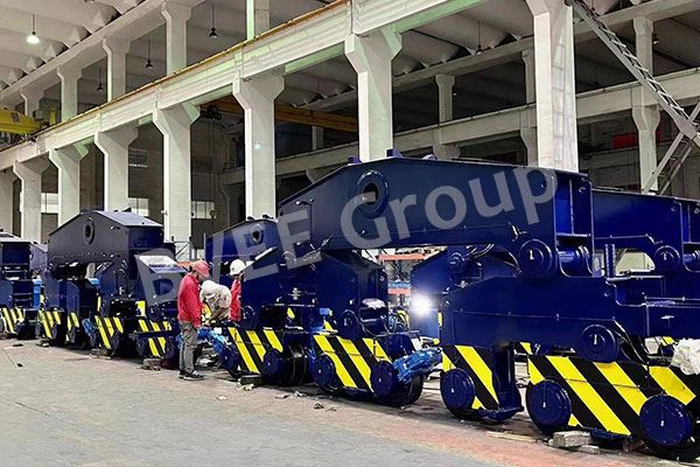
Consider Lifting Capacity
When you are considering purchasing a gantry crane, make sure you choose the one with higher lifting capacity as it will save your manpower and time while improving the task efficiency. With higher lifting capacity, tasks can be handled without the need to indulge in multiple rounds of loading and unloading. While you are taking the lifting capacity into consideration, make sure you are also keeping the cost-effectiveness factor in mind to form a balance between time, quality, and cost.
Consider Movability
You need to see whether you need a movable Gantry Crane for your unit to not. If you have to lift indoors as well as outdoor, then you might need a movable crane which in your case will be proven affordable and efficient.
Consider Wheels
Your gantry crane should be mounted on wheels that should be able to balance and distribute the load. For sites where you need to lift infrequently, wheeled gantry cranes with adjustable lifting height are the most cost-effective solution.
Operations You Can Do With a Gantry Crane
Moving Loads
The biggest existing gantry cranes are those used for moving heavy loads, especially for loading and unloading containers from boats on decks and harbors. As well, there are some big gantry cranes used for the construction of boats, cruise ships, and oil rigs, capable of moving tenths of thousands of tons.
Weighing Loads
With a slight adaptation of the Gantry Crane, you can use it to weigh heavy loads precisely. No need to use a loaded lorry on an industrial scale to know how many tons of material you are transporting or moving. With a high-precision scale for big weights, your gantry crane will allow you to weigh while moving the material inside your production plant. That’s efficiency taken to the limits.
Rotating Loads
Turning heavy loads without damaging them or causing damage to goods, people or infrastructures is a very critical operation. It doesn’t matter if it is a concrete structure, the keel of a boat, or any intermediate product that needs to be rotated to carry out more operations. A few tons fall on the floor because of a lousy load turning device translates into a substantial economic and material loss and probably damages goods and infrastructure.
What Are the Working Theory of A Gantry Crane
Load Positioning:
Before lifting the load, the gantry crane must be positioned correctly. If it is a rail-mounted gantry crane (RMG) or rubber-tired gantry crane (RTG) used in shipping ports or container yards, it runs along fixed tracks or rubber tires to reach the desired position. For stationary gantry cranes, the load is brought to the crane using forklifts or other material handling equipment.
Load Attachment:
The load to be lifted is securely attached to a lifting device, which could be a hook, web sling, or specialized lifting attachment depending on the type of load.
Lifting Operation:
The lifting mechanism of the gantry crane, which includes an electric or hydraulic hoist, is activated. The hoist uses a combination of pulleys, gears, and motors to lift the load. As the hoist's motor turns the drum, the wire rope or chain connected to the lifting device starts to wind up, lifting the load vertically.
Horizontal Movement:
To move the load horizontally, the entire gantry crane is equipped with a trolley mechanism. The trolley, which holds the hoist, runs along the length of the girder(s) using wheels or a rail system. By moving the trolley back and forth, the load can be precisely positioned along the girder.
Vertical Movement:
Some gantry cranes, especially adjustable-height gantry cranes, have the ability to adjust their height. This is achieved either through telescoping sections of the A-frame legs or hydraulic systems. The vertical movement enables the crane to lift loads to different heights, accommodating various lifting requirements.
Load Placement:
Once the load is lifted and in the desired position, the hoisting mechanism is stopped, and the load is carefully placed or lowered to the target location.
Load Handling and Safety:
During the entire lifting and movement process, operators must follow strict safety protocols. This includes avoiding exceeding the Gantry Crane's rated lifting capacity, maintaining a safe distance from the load, and utilizing safety features like limit switches and overload protection mechanisms to prevent accidents.
Applications of Gantry Crane
Shipyards
Shipyards are where heavy-duty gantry cranes are used the most to help move heavy ship parts and loads. They perform a variety of roles, including, but not limited to, shipbuilding, material movements, repair, and unloading.
Manufacturing
Gantry cranes are used across various manufacturing sectors, especially in the aircraft, auto, and steel industries. They perform considerable roles in these fields, such as lifting and moving heavy materials, supplies, and parts placement and installation.
Warehouses
Warehouse operations involving heavy lifting are generally left for gantry cranes. Most of gantry cranes are mobile, therefore, they take care of all aspects that require loading and unloading.
Container Yards
Gantry cranes move heavy, box-sized containers that an otherwise regular forklift cannot. Based on their flexibility and mobility, they are the best tool for shipping container movement.
Certificate
