



Crane Sheave
BVEE has accumulated many experiences in all types of handling equipment and port machinery over 20 years. BVEE provides innovative, efficient and continuous heavy bulk material treatment solutions for global customer through comparative analysis, combined with actual working conditions and professional technology. And always developing intelligent mobile material handling equipment to replace the rail stacker and traditional loading and unloading process in the yard of port terminal to improve efficiency, reducing cost, lessening pollution and helping the port industry develop in a way of efficient, energy-saving and environment friendly. BVEE also with more activities like: Fabrication and Machining Spare Parts, Maintenance and Repair service, Modification, Erection, Commissioning, Inspection, Calculation and Analysis, Dismantling and Disposal.
Our Advantages
Wide Range of Applications
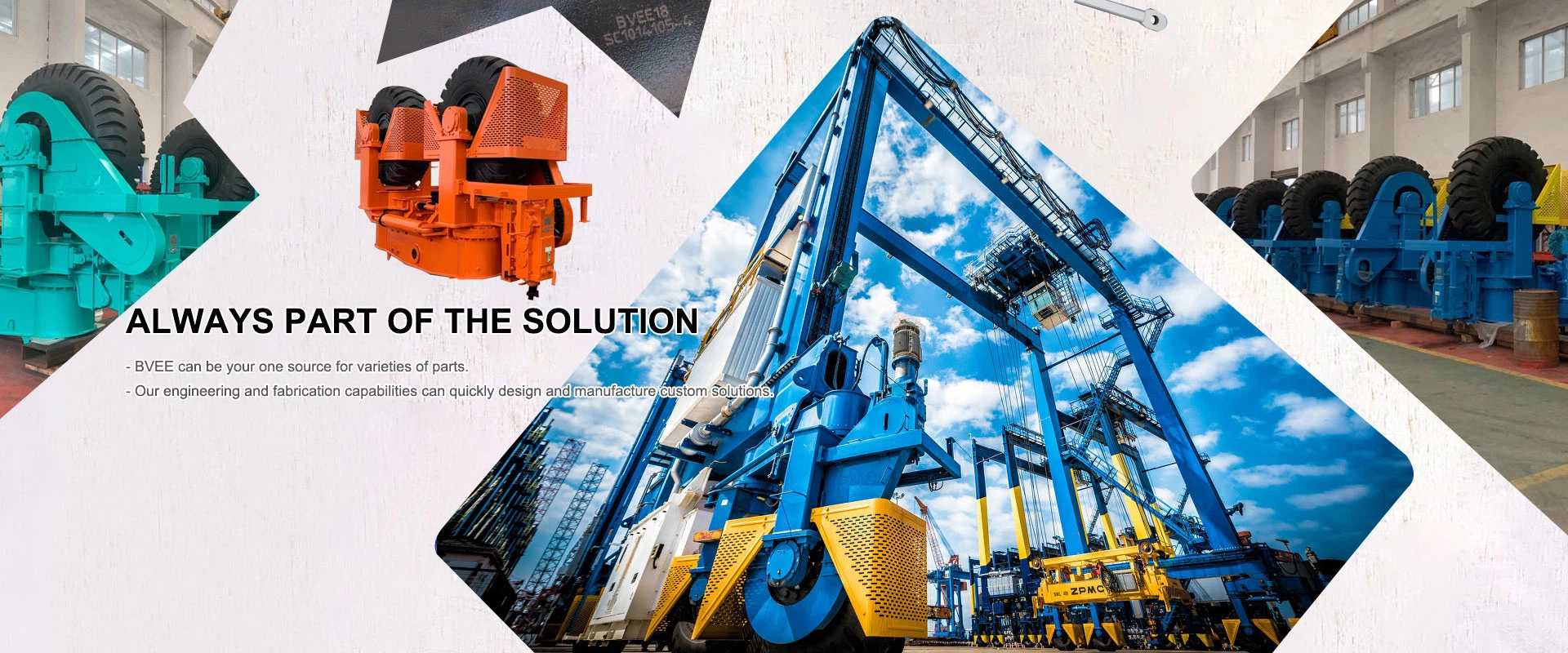
Our products, such as Port Equipment Wheel, Crane Sheave, Crane Rail, Hoist Drum, Gantry Crane, Container Spreader, Crane Cabin, and Stacker Reclaimer, are widely used in the range of transporting Iron & ore, coal and etc. in various mines, ports and storage yards.
Rich Products
Our company produce a wide variety of Bulk material handling equipments and port equipment, including Port Equipment Wheel, Crane Sheave, Crane Rail, Hoist Drum, Gantry Crane, Container Spreader, Crane Cabin, and Stacker Reclaimer.
24-Hour Service
Our company promises to provide 7×24 hours service after the contract is signed. We will respond within 1 hour after receiving the message, provide solutions to general faults within 8 hours, and solve complex problems within 24 hours.
Quality Guaranteed
Our company has passed ISO quality certification system. Our company has obtained certificates such as ISO14001:2015, ISO9001:2015. All products are strictly tested in accordance with industry standards and contract agreements before leaving the factory.


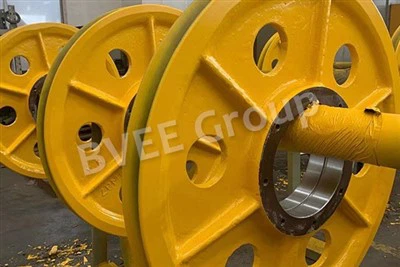
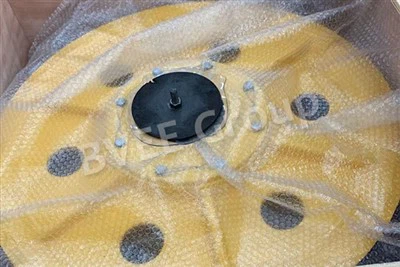

Crane Sheave is a grooved wheel that holds the cable, rope, or wire on a pulley system. The sheave is situated on an axle or bearing within the pulley, and an operator can adjust the amount of force and direction necessary for lifting. The sheave’s movement helps reduce friction and wear on the rope or cable.
Lightweight Construction & Corrosion Resistance
Compared to metal sheaves, Crane Sheaves are much lighter, reducing the overall weight of the system without compromising durability. Unlike metal, nylon is a chemically resistant material that will not rust or corrode.
Longer Cable/Rope Life
Crane Sheaves are more elastic and allow a larger contact surface area between the groove and the rope or cable, distributing the load more evenly and reducing stress. As a result, the entire system benefits from reduced maintenance and cost savings.
Increased System Load Capacity & Reduced Operating Costs
Crane Sheaves weigh about 20% that of metal sheaves, so the lifting system can use the weight savings to lift more, especially with boom point sheave applications. Because Crane Sheaves last longer than metal sheaves, they do not need to be replaced as often.

Types Of Crane Sheave
Crane Sheaves For Offshore Environments
As in the Oil & Gas market, the marine and offshore sector is particularly demanding in terms of quality. Such environments may require the Crane Sheaves to be used under water, so it is necessary to take water tightness, pressure resistance and surface protection by means of specific coatings into account.
Crane Sheaves For Ports And Shipyards
The main characteristic that this component must fulfil for its use in the port sector is groove hardness, as it must withstand very high speeds. In such environments, mechanical components that are not sufficiently resistant will be subject to accelerated wear. Crane Sheaves used in ports and shipyards have a standardized bearing, which are cylindrical roller bearings in most cases. These environments are highly corrosive and therefore bearings must have the necessary protection to prevent premature corrosion. The most commonly mounted bearings on Crane Sheaves which work in ports and shipyards is the cylindrical roller bearing. As these environments are highly corrosive, the bearings as well as the Crane Sheaves have to count with a special protection to prevent premature corrosion.
Crane Sheaves For Mining And Industry
These environments are not so demanding in terms of load criteria but they are characterized by extreme temperatures and a particularly adverse ambience. For this reason, choosing the appropriate shaft/bearing housing configuration is essential to guaranty protection against dust and allow a correct lubrication.
Crane Sheaves For Construction And Mobile Cranes
Lifting and transport machinery for use in the construction sector generally have lower operating hours. Solutions may be extremely diverse and are adapted to the specifications of each project, so their main feature is flexibility in their design characteristics.
How To Choose Crane Sheave
Pay Attention To Sheave Groove Size And Diameter
When Crane Sheaves for your wire rope are too large or too small, there is greater stress on both resulting in spooling trouble and premature wear. For instance, grooves that are too large have proven to cause the wire rope to flatten and unbalance leading to the wire breaking. When properly sized, the groove provides maximum support to the rope lowering the sheave bearing pressure and increasing sheave and rope lifespan. Typically the groove diameter should exceed that of the wire rope by 5% while groove depth should be one-and-a-half times the rope diameter. A groove angle between 30° and 45° offers the best support for the wire rope. Specific dimensions and angles may vary depending on your application.
Ensure Sheave Groove Hardness
The hardness of Crane Sheaves is a factor that is often overlooked. Since the wire rope is hard, the pressure it exerts on the groove can lead to corrugations if the Crane Sheave is not properly hardened. To avoid this, ensure your steel cable sheaves are flame hardened. (A simple way to determine if your grooves are worn out is by using a sheave gauge.)
Correct Sheave Groove Alignment
Poor alignment of your Crane Sheaves wears out the wire rope and sheave flange. This is because the rope comes into constant contact with the flange creating stress on the rope, abrasion damage and fatigue breaks. Any alignment issues should be corrected immediately.
Construction and Engineering
Crane Sheaves are essential components in construction projects, used in cranes, hoists, and lifting equipment. They facilitate the lifting and movement of heavy materials and equipment on construction sites.
Manufacturing and Industrial Operations
In manufacturing plants and industrial facilities, Crane Sheaves power conveyor belts and material handling systems. They enable the efficient transport of goods and materials throughout the production process.
Transportation and Logistics
Crane Sheaves are integral to transportation systems, such as cable cars, ski lifts, and elevator mechanisms. They ensure smooth and reliable operation in transporting passengers and cargo.
Marine and Maritime
On ships and vessels, Crane Sheaves support rigging systems and assist in hoisting sails and lifting heavy loads. They play a crucial role in maritime operations, ensuring the safe and efficient handling of cargo and equipment.
Automotive and Aerospace
Crane Sheaves are used in automotive accessories, such as pulley systems in engines and transmission mechanisms. In the aerospace industry, they contribute to the operation of aircraft components and systems.
How to Maintain Crane Sheave
Clean The Sheavesurface & Lubricate Pulley Bearings
Dust and impurities easily accumulate on the surface of the Crane Sheave, affecting its normal operation. Clean the pulley surface regularly, wipe it with a soft cloth, and use special cleaner if necessary. Crane Sheave bearings are an important part of Crane Sheaves. Regular lubrication of the bearings can reduce wear and extend service life. It is recommended to use specialized lubricants.
Prevent Crane Sheaves From Rusting & Be Careful To Avoid Overloading
Rusty Crane Sheaves can reduce their operating efficiency and even cause them to become stuck. Keep the Crane Sheave surface dry and clean to avoid prolonged exposure to moisture. Excessive load will cause increased Crane Sheave wear and shorten service life. When using a Crane Sheave, make sure the load is within the load-bearing range of the pulley.
Regularly Check The Status Of The Crane Sheaves
Regularly check the degree of wear and appearance damage of the Crane Sheave, and deal with problems in time. If the Crane Sheave is seriously worn or cracked, it should be replaced immediately.
Use Crane Sheave Equipment Safely
When using Crane Sheave equipment, follow operating procedures to ensure personal and equipment safety. Avoid using Crane Sheaves that do not meet specifications to avoid accidents. In addition to the daily maintenance of the pulleys, it is also necessary to check for hidden dangers in the pulleys.
How to Install Crane Sheave
Pulley Position Selection
The installation position of the lifting pulley needs to be selected according to the specific lifting equipment. Generally, it should be installed under the heavy object, on the front and rear sides of the crane, and on the back. It is necessary to consider the fixing problem of the lifting pulley and the convenience of use.
Installation Of The Lifting Pulley
Before installation, check whether the lifting pulley is intact, and then firmly connect the lifting pulley with the hook to ensure that the rotation direction of the lifting pulley is consistent with the lifting method. Then fix the lifting pulley to the wire rope connecting plate with bolts.
Wire Rope Threading
The wire rope needs to pass through the lifting pulley. It is necessary to pay attention to the threading direction and sequence. Generally, it starts from the bottom of the pulley and then passes through the pulley. During the threading process, it is necessary to pay attention to the force direction of the wire rope to avoid safety accidents such as breakage.
Pulley Positioning
After installing the wire rope, the lifting pulley needs to be positioned and fixed so that it can rotate smoothly. You can select fixing devices such as buckle plates and brackets according to the specific installation location to fix the lifting pulley.
Certificate
