



Hoist Drum
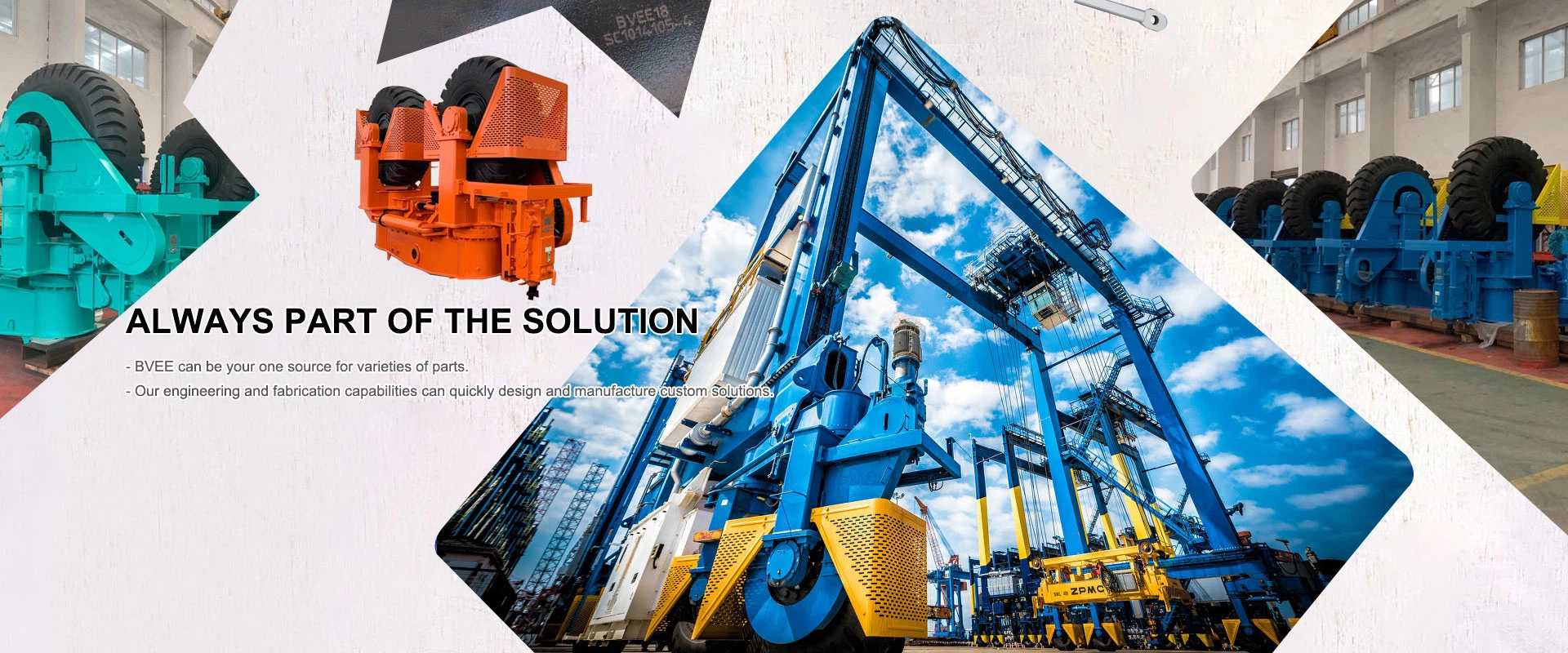
BVEE has accumulated many experiences in all types of handling equipment and port machinery over 20 years. BVEE provides innovative, efficient and continuous heavy bulk material treatment solutions for global customer through comparative analysis, combined with actual working conditions and professional technology. And always developing intelligent mobile material handling equipment to replace the rail stacker and traditional loading and unloading process in the yard of port terminal to improve efficiency, reducing cost, lessening pollution and helping the port industry develop in a way of efficient, energy-saving and environment friendly. BVEE also with more activities like: Fabrication and Machining Spare Parts, Maintenance and Repair service, Modification, Erection, Commissioning, Inspection, Calculation and Analysis, Dismantling and Disposal.
Our Advantages
Wide Range of Applications
Our products, such as Port Equipment Wheel, Crane Sheave, Crane Rail, Hoist Drum, Gantry Crane, Container Spreader, Crane Cabin, and Stacker Reclaimer, are widely used in the range of transporting Iron & ore, coal and etc. in various mines, ports and storage yards.
Rich Products
Our company produce a wide variety of Bulk material handling equipments and port equipment, including Port Equipment Wheel, Crane Sheave, Crane Rail, Hoist Drum, Gantry Crane, Container Spreader, Crane Cabin, and Stacker Reclaimer.
24-Hour Service
Our company promises to provide 7×24 hours service after the contract is signed. We will respond within 1 hour after receiving the message, provide solutions to general faults within 8 hours, and solve complex problems within 24 hours.
Quality Guaranteed
Our company has passed ISO quality certification system. Our company has obtained certificates such as ISO14001:2015, ISO9001:2015. All products are strictly tested in accordance with industry standards and contract agreements before leaving the factory.


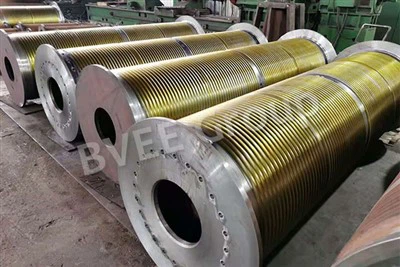
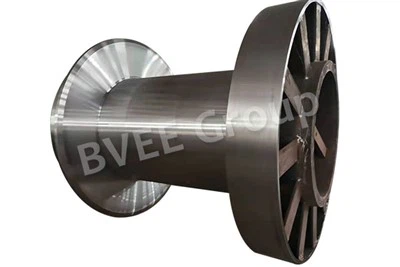


Hoist Drum is used to raise and lower conveyances within the mine shaft In underground. Modern hoists are normally powered using electric motors. When using a drum hoist the hoisting cable is wound around the drum when the conveyance is lifted. Single-drum hoists can be used in smaller applications, however double-drum hoists easily allow the hoisting of two conveyances in balance. Drum hoists are mounted on concrete slabs within a hoistroom, the hoisting ropes run from the drum, up to the top of the headframe, over a sheave wheel and down where they connect to the conveyance (cage or skip).
Improved Safety
One of the primary benefits of using a Hoist Drum to service mining vehicles is the improved safety it offers. By using a Hoist Drum, technicians can safely lift assets to facilitate ease of access and reduce stress on their bodies. This reduces the risk of accidents and injuries on the job.
Increased Efficiency
Hoist Drums are much faster and more efficient than traditional methods of servicing mining vehicles. They can lift assets quickly and easily, reducing the time and effort required to perform maintenance and repairs.
Enhanced Accuracy
Using a Hoist Drum allows technicians to position the asset to allow for improved accuracy for major jobs, such as gearbox replacements, which can improve the quality of repairs and maintenance.
Improved Access
Hoist Drums provide technicians with better access to hard-to-reach areas of mining vehicles, which can make it easier to perform maintenance and repairs. This can be particularly useful for larger vehicles that may be difficult to work on using traditional methods.
Reduced Downtime
By using a Hoist Drum to service mining vehicles, technicians can complete maintenance and repairs more quickly and efficiently. This can help to reduce downtime and improve the overall productivity of the mine site.
Manual Chain Hoist
Manual chain hoists concentrate a low force with high travel input into a high force but low travel output. This is the cause of their slow operation. They utilize multiple gears with different number teeth inside their lifting mechanism, which is activated by pulling the hand chain several times. This principle is responsible for accomplishing the task of lifting a heavy object.
Electric Chain Hoist
Electric chain hoists use a load chain as the lifting medium. The load chain is pulled by a motor that converts electrical energy to mechanical energy used to lift the load. The electric hoist motor is housed inside a heat-dissipating shell, which is typically made from aluminum. The hoist motor is equipped with a cooling fan to dissipate heat quickly during its continuous service and to enable its operation in hot environments.
Electric Wire Rope Hoist
Electric wire rope hoists lift loads utilizing a wire rope as the lifting medium. Wire ropes consist of a core that runs through the center of the wire rope and several strands of wire intertwined around the core. This construction forms a higher-strength composite rope. Wire ropes intended for hoisting applications are typically made from carbon steel, stainless steel, Monel, and bronze; these materials have high resistance to wear, fatigue, abrasion, and corrosion.

How To Choose Hoist with Hoist Drum
Choose the Correct Type of Hoist
The first step is to select a hoist befitting your needs. There are four main types of hoists, and each one comes with its own set of pros and cons. a. Manual Hoists: Manual hoists are the simplest and cheapest option available. They are also compact and lightweight, which means you can move or transport them easily. But, operating a manual hoist is quite laborious. You will need to pull the chain every time you use the hoist. So, it’s best to use this type of hoist occasionally. b. Electric Hoists: A type of powered hoist, electric hoists are silent, durable, cost-effective, and have high load-carrying capacity. Most electric hoists come with adjustable speed and an emergency brake. The adjustable speed will vary from model to model. But, the basic variants usually have only slow and fast speed options.You can use these hoists for lifting applications that require precision. However, electric hoists are not designed for continuous operation. Prolonged use can overheat the electric motor, causing it to burn. c. Pneumatic Hoists: They are quite similar to electric hoists. But, instead of electricity, pneumatic hoists use compressed air as the power source. These hoists are suitable for continuous operation (more lifting cycles) and long lifts. d. Hydraulic Hoists: Hydraulic hoists need a suitable hydraulic power supply. They are best suited for lifting operations in extreme conditions, including areas with a high risk of explosion. They also have very high lifting power, allowing you to lift heavy loads with ease and precision. They run quietly and are durable. The only con is, they can be quite expensive.
Take the Rated Capacity Into Account
Rated capacity is another critical factor that you can’t ignore. Each hoist comes with a rated capacity. You will need to make sure that the load doesn’t exceed the rated capacity. Overloading not only leads to accidents but also reduces hoist life.
Consider the Required Lift Height
In addition to the rated capacity, you also need to consider lift height. It is the maximum distance from the floor to the hook when the hoist is in the resting position. When it comes to lift height, you will need to consider the distance between the hook when it is raised and lowered.
Check the Type of Suspension You Will Use
The next factor you need to consider is the type of hoist suspension. a. Hook Mounted: The hoist body comes with a hook, which you can attach to the crane or I-beam to suspend the hoist. You can get a rigid or a swivel hook system. The rigid hook system is better for applications where you need to keep your load stable. On the other hand, the swivel hook system is more suitable for applications that require rotational movement. b. Lug Mounted: Sometimes, the hoist frame comes with a lug mounting. You can connect a lug-mounted hoist to a trolley, I-beam, or any other support structure. You will need to use suitable pins or studs to fasten the lug to the hoist securely. c. Trolley Mounted: You can find hoists with an integral trolley. However, you can also connect a hook, clevis, or lug-mounted hoist to a trolley using suitable pins or studs.
Understand How Fast You Will Operate the Hoist
Lifting speed is also a critical factor. In this case, the two important parameters you need to consider-How far the load needs to travel (lift distance or height)? How quickly do you want to lift the load (lift speed)? As you can see, a manual hoist will take a considerably longer time to lift and move the load. If you want to lift heavy loads quickly and over a long distance, you are better off using a powered hoist.
Find Out What Power Source Is Available
Choosing the right power supply is also essential, especially when using electrical hoists. You will come across single or three-phase power supply options for electric hoists. Single-phase hoists are suitable for carrying lighter loads, while three-phase hoists can lift heavier weights. Most manufacturing and construction projects need three-phase electric hoists as the loads are often heavy.
Applications of Hoist with Hoist Drum
Applied In Assembly Lines, Workshops, And Production Facilities
Electric chain hoists prove indispensable in assembly lines, workshops, and production facilities, where they streamline material handling processes and boost overall efficiency. These hoists are particularly well-suited for indoor use, excelling in applications that demand controlled lifting and precise load positioning.
Applied In Construction Sites
On the other hand, wire rope hoists shine in both indoor and outdoor settings, exhibiting their capability to handle bulky and irregularly shaped loads. This makes them the go-to choice for construction sites and challenging environments.
Applied In The Transportation Industry
Moreover, the transportation industry benefits from wire rope hoists, as they play vital roles in overhead cranes for loading and unloading cargo at ports and logistics centres.
Applied In Workshops, Garages, And Maintenance Tasks
For smaller-scale applications, manual hoists serve as versatile tools in various industries. Their capability to lift and move loads efficiently without relying on a power source makes them perfect for workshops, garages, and maintenance tasks.
Applied In Petrochemical Plants, Mining, And Offshore Operations
In hazardous environments where electricity use is not viable, explosion-proof hoists, air hoists, or pneumatic hoists, come to the rescue. These hoists are preferred in industries like petrochemical plants, mining, and offshore operations, where flammable or explosive atmospheres may be present.
Applied In Automotive Repair Shops, Construction Sites, And Industrial Settings
Hydraulic hoists boast a high lifting capacity, effortlessly handling substantial loads with precision. This makes them indispensable in automotive repair shops, construction sites, and industrial settings, where lifting heavy equipment and machinery is a frequent requirement.
What are the Working Theory of Hoist with Hoist Drum
Operating a hoist includes knowing the weight restrictions and requirements as well as built-in safety features. The operator may set operating limits of a hoist, which limit movements under certain circumstances. A hoist also comes with safety features that prevent overloading a lift, limit travelling movement, or prevent all movements with an emergency stop button.
Once all regulations and requirements are set, the operator uses the controller to activate the relevant button or joystick to move the hook vertically. The signals given by the operator, along with any safety devices or sensors, control the break and motor. When the hoist receives the signal, power is supplied to the motor, releasing the break. The motor drives the hoisting gear, which reduces the rotation speed and increases torque in order to lift the load
The rope is fixed to the hoisting drum on one end and connected to the rope anchorage on the other. As the hoist drum rotates, the rope winds or unwinds and is guided into the correct groove of the drum, allowing the hook to raise or lower. There are two ways to stop a hoist: by releasing the up or down controls on the controller, or by activating the emergency stop button.
Certificate
