



Crane Cabin
BVEE has accumulated many experiences in all types of handling equipment and port machinery over 20 years. BVEE provides innovative, efficient and continuous heavy bulk material treatment solutions for global customer through comparative analysis, combined with actual working conditions and professional technology. And always developing intelligent mobile material handling equipment to replace the rail stacker and traditional loading and unloading process in the yard of port terminal to improve efficiency, reducing cost, lessening pollution and helping the port industry develop in a way of efficient, energy-saving and environment friendly. BVEE also with more activities like: Fabrication and Machining Spare Parts, Maintenance and Repair service, Modification, Erection, Commissioning, Inspection, Calculation and Analysis, Dismantling and Disposal.
Our Advantages
Wide Range of Applications
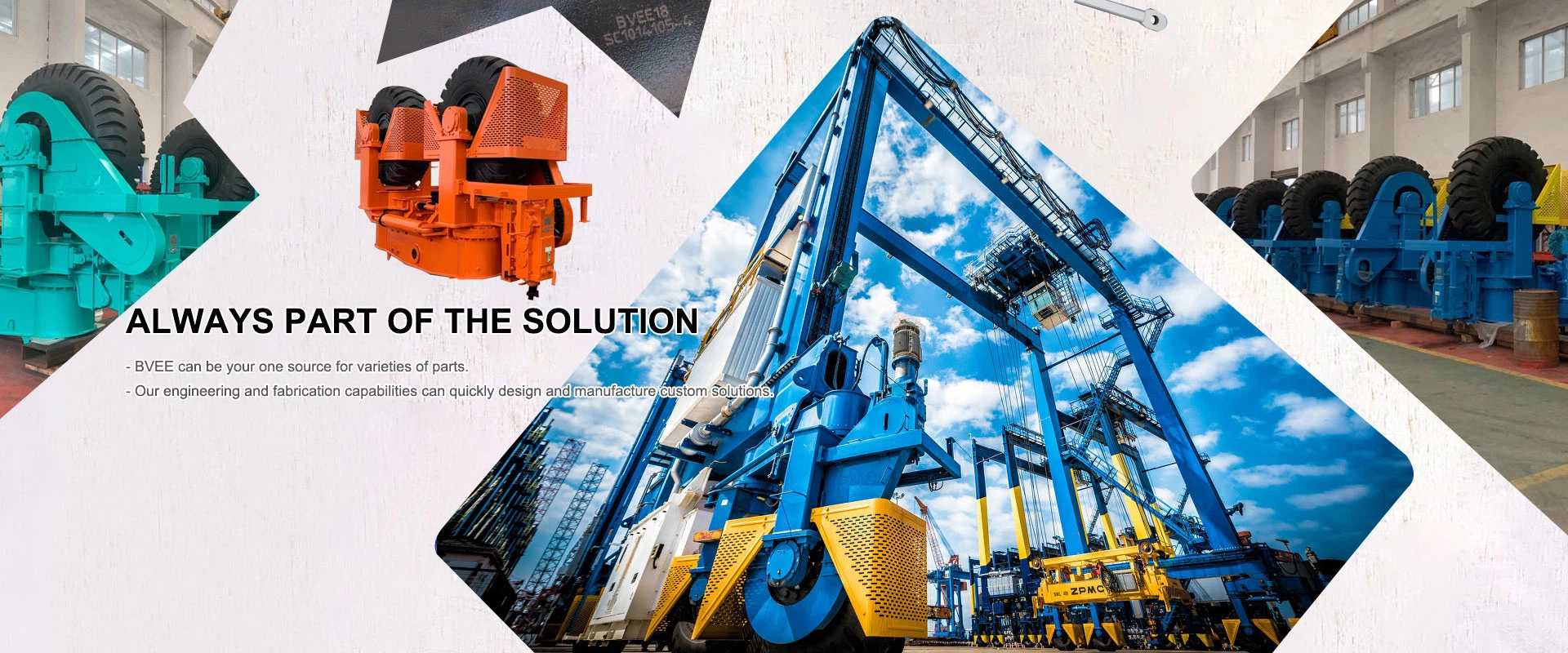
Our products, such as Port Equipment Wheel, Crane Sheave, Crane Rail, Hoist Drum, Gantry Crane, Container Spreader, Crane Cabin, and Stacker Reclaimer, are widely used in the range of transporting Iron & ore, coal and etc. in various mines, ports and storage yards.
Rich Products
Our company produce a wide variety of Bulk material handling equipments and port equipment, including Port Equipment Wheel, Crane Sheave, Crane Rail, Hoist Drum, Gantry Crane, Container Spreader, Crane Cabin, and Stacker Reclaimer.
24-Hour Service
Our company promises to provide 7×24 hours service after the contract is signed. We will respond within 1 hour after receiving the message, provide solutions to general faults within 8 hours, and solve complex problems within 24 hours.
Quality Guaranteed
Our company has passed ISO quality certification system. Our company has obtained certificates such as ISO14001:2015, ISO9001:2015. All products are strictly tested in accordance with industry standards and contract agreements before leaving the factory.

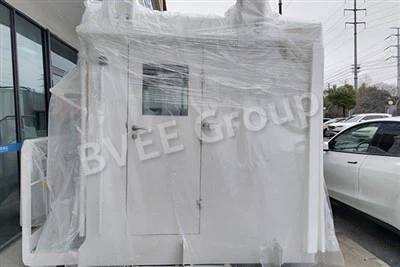


Crane Cabins are designed to suit different climate conditions and working areas. These Crane Cabins are often the control centre where operators spend their entire working hours. Essential features in a well-designed operator cabin are the mechanical structure suitable for aggressive working conditions, panoramic field of view, and ergonomic conditions that prioritize the occupational health of the operator.
Advantages of Crane Cabin
High Safety
When the lifting height of a Crane Cabin exceeds a certain level, the single cab has limited vision, making it difficult to operate and prone to safety accidents. When a Crane Cabin is operating at a high altitude, it can select a cab with a better view for operation according to the specific situation, which improves the safety of the operation.
Flexible And Compact Design
Crane Cabins offer leading flexibility and mobility, especially in situations where multiple obstructions are present. Crane Cabins can be used to access narrow passages and navigate project sites that have limited space, making them a practical solution for many industries, site conditions, and materials. Crane Cabins are significantly smaller than most options on the market, making them the best option for construction sites on tight city streets and other projects with extremely limited space.
Fast Setup And Efficient Operation
Crane Cabins are designed to offer rapid setup, minimizing the amount of time spent on prep and allowing you to get started on your project faster. This faster setup time drastically enhances efficiency and productivity, allowing you to get more work done in less time.
Reliable Strength And Stability
While Crane Cabins may be smaller than some other types of cranes, they still offer a high level of strength that allows them to complete comparable lifting tasks. Heavy-duty axles, outriggers, and other high-strength components ensure that a Crane Cabin has the power needed to lift heavy materials to required heights in the safest and most efficient way possible.
Types Of Crane Cabin


Truck-Mounted Cranes
Truck-mounted Cranes combine the maneuverability of a truck with the standard features of a crane. Outriggers are used with a truck-mounted crane for additional stability, the advantage comes from a truck-mounted crane being able to mobilise to site quickly. This makes them more cost-efficient than hiring a larger crane with a bigger radius for smaller lifts.
Franna Cranes
Similar to a truck-mounted crane, a Franna Crane (also known as a pick and carry crane) combines the mobility of a truck with the lifting power of a crane. Unlike truck-mounted cranes, the boom of a franna crane is inbuilt into the chassis of the vehicle. This allows Franna Cranes to lift heavier weights without the need for outriggers. However, it doesn’t allow for 360’ rotations as the direction of the boom is fixed, meaning it has a lot less rotational movement.
Bubble Cranes
Often used in compact urban environments, bubble cranes are typically four wheeled cranes that have the features and benefits of an all-terrain crane in a smaller design with a single cab (similar to a truck-mounted or franna crane). This streamlined design comes at the cost of lifting capacity, but the taller boom and jib (crane arm) means bubble cranes are highly effective in smaller city spaces and completing residential lifts.
All Terrain Cranes
These cranes are road legal and can handle most off-road terrains. All-terrain cranes have a separate crane cabin from the driver’s Crane Cabin and are generally not able to move when performing lifts. Through the use of additional lifting and rigging equipment such as stabilising bog mats and outriggers, these cranes can perform heavier lifts.
Mini-Crawler Cranes
Designed to be used in tight spaces and indoors, mini crawler cranes are often remote-controlled cranes that can be used within factories or plants to help install industrial equipment. Relative to their size, Mini-Crawler Cranes can lift significantly heavier weights due to their four stabilising legs which are planted when performing lifts.
Check the Load Weight to Be Lifted
One of the first things you need to consider is the weight of the load to be lifted or moved using the crane. Naturally, you need a crane with a suitable lifting capacity to move the load. If you use a high-capacity crane for a small load, you will most likely end up wasting time, labor, and money. On the other hand, a low-capacity crane can lead to fatal accidents and cause damage to the load. You also will need to determine what type of load you are going to move. The success of your project depends on it. For example, moving a liquid-filled tank will require special lifting conditions compared to moving a concrete block or a heavy machine. In short, the type of load will define the lifting services you need, which in turn will determine the type of crane you have to select.
Know the Lift Height
The height of the lifting load is as critical as the load capacity of the crane. The length of the crane’s boom will depend on how high the loading material needs to go. If the construction is vertical, you will need a lift with a longer boom length. Plus, you will need to check the weather conditions, particularly the wind. The higher the lift height, the more likely that wind will sway the load, and this may lead to potential accidents. You also will need to adjust the amount of counterweight according to the lift height. Usually, a tower crane is the most likely option for higher lift height requirements.
Find the Moving Distance
Just like the vertical distance, the crane also will need to travel some horizontal distance to pick up the load. If you need the crane to transport the equipment from one spot to the other, you will need to get a Crane Cabin. If there is a fixed path of movement, you can use a crane with rails.
Provide Good Sight:
The Crane Cabin is reasonably designed and arranged, providing the driver with a wide sight range for lifting operations, and can clearly observe the lifting site from multiple angles to ensure the accuracy and safety of the work.
Provide Relevant Control Devices:
There are various control devices installed in the Crane Cabin, including boom control, lifting control, hook control, etc. The driver can use these devices to accurately move the crane to the designated position for lifting.
Safety Guarantee:
The Crane Cabin is equipped with emergency braking system, safety protection device, anti-overturning and anti-derailment device and other safety equipment to ensure the safety of the driver and avoid accidents during crane operation.

What Are The Components Of a Crane Cabin
Seats
Most of the seats in a Crane Cabin are made of high-strength materials and have functions such as rotation and adjustment, which can facilitate the driver's operation and observation. The comfort of the seat is very important, because long-term driving will have adverse effects on the driver's body.
Joystick
The joystick is one of the most critical operating devices in the Crane Cabin, and its function is to control the action of the crane. The joystick usually includes movement in the up and down, front and back, left and right directions, as well as various function keys, such as horn keys, light keys, etc. The flexibility and accuracy of the joystick play a vital role in the operation of the crane.
Dashboard
The dashboard is one of the most important display devices in the Crane Cabin. It displays various data such as the speed, height, weight, temperature, and pressure of the crane. The driver can understand the real-time status of the crane through the dashboard, which is crucial to ensure the safe operation of the crane.
Windshield And Wipers
The Crane Cabin often needs to experience various severe weather conditions, including lightning, rain, snow, sand and dust, so it is very important to install windshields and wipers. The windshield can block sand and snow, while the wipers can ensure the driver's clear vision, thereby ensuring the safe operation of the crane.
How to Maintain Crane Cabin
Pre-Operation Inspection:
Before operation, carefully check whether there are any debris inside the Crane Cabin, whether the controller is operating normally, whether the boom and steel cable are intact, and whether the crane is overweight and overloaded.
Operation During Work:
You need to carefully operate the crane cabin and pay attention to the indicator lights and voltage changes on the operation panel during operation. You should increase or decrease the voltage in time according to work needs, keep it stable during the lifting process, and shut down the crane in time.
Post-Operation Inspection:
After operation, the main switches in the Crane Cabin should be turned off, the controller, wires, radiator and other components should be checked, and the dust and dirt inside and outside the Crane Cabin should be cleaned to ensure that the crane is in a safe state
Regular Maintenance:
The Crane Cabin can be regularly maintained, and the electrical equipment and related sensors should be checked every once in a while to see if they are operating normally and whether they can be stable under different use environments.
Drying And Moisture-Proof:
When using the Crane Cabin in humid conditions, you can consider adding desiccant inside the cab to absorb moisture to prevent corrosion and damage inside the Crane Cabin.
Frequent Cleaning:
You need to frequently clean the interior of the Crane Cabin to avoid erosion and damage to electrical equipment by dust and dirt. If there is dirt and dust, you can clean it with a clean cloth or a vacuum cleaner.
Certificate
