Hey there! As a hook beam spreader supplier, I'm super stoked to share with you all the ins and outs of what makes up a hook beam spreader. These bad boys are crucial in all sorts of heavy - lifting operations, especially in ports and industrial settings. So, let's dive right in and break down the key components of a hook beam spreader.
1. Main Beam
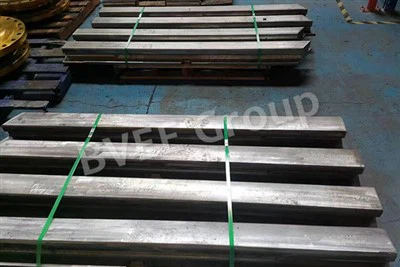
The main beam is like the backbone of the hook beam spreader. It's a long, sturdy piece that runs horizontally across the spreader. This beam is designed to handle a ton of weight, so it's usually made from high - strength steel. The main beam provides the structural support for all the other components and distributes the load evenly.
Think of it as the foundation of a house. Without a strong main beam, the whole spreader wouldn't be able to function properly. It's engineered to resist bending and torsion forces that occur when lifting heavy loads. The length of the main beam can vary depending on the specific application. For example, in a large port where they're handling big containers, the main beam might be quite long to reach across the width of the container.


2. Hooks
Now, the hooks are what give the hook beam spreader its name. These are the parts that actually grab onto the load. They're typically made of forged steel, which is incredibly tough and durable. Hooks come in different shapes and sizes, depending on what they're going to be used for.
Some hooks are designed to grab onto chains, while others are made to fit into specific slots on a container or other heavy objects. The hooks need to be able to open and close securely. They often have a locking mechanism to prevent the load from accidentally slipping off. This is super important for safety reasons. You don't want a heavy load dropping unexpectedly!
3. Lifting Points
Lifting points are another essential component. These are the places on the spreader where the crane or other lifting equipment attaches. There are usually multiple lifting points to ensure a balanced lift. The lifting points are carefully positioned on the main beam to distribute the weight evenly and prevent the spreader from tilting during the lifting process.
They're often reinforced with extra steel to handle the high stresses that come with lifting heavy loads. The design of the lifting points also needs to be compatible with the type of lifting equipment being used. For example, some lifting points might be designed to fit a specific type of crane hook or shackle.
4. Trolley System
A lot of hook beam spreaders come with a trolley system. This allows the spreader to move horizontally along a beam or track. The trolley system is made up of wheels or rollers that run on a rail. It gives the spreader more flexibility in terms of positioning the load.
For instance, in a busy port, the spreader can quickly move from one container to another using the trolley system. It's powered by an electric motor or hydraulic system, depending on the design. The trolley system needs to be smooth and reliable to ensure efficient operation.
5. Control System
The control system is like the brain of the hook beam spreader. It allows the operator to control all the functions of the spreader, such as opening and closing the hooks, moving the trolley, and adjusting the lifting points.
Most modern hook beam spreaders have an electronic control system. This can be operated from a control panel on the crane or from a remote control. The control system needs to be user - friendly and responsive. It also has safety features built in, such as emergency stop buttons and overload protection.
6. Hydraulic System (if applicable)
Some hook beam spreaders use a hydraulic system to power certain functions. For example, the hydraulic system can be used to open and close the hooks or to move the trolley. Hydraulic systems are great because they can provide a lot of power in a relatively small space.
They work by using pressurized fluid to move pistons and cylinders. The hydraulic system needs to be well - maintained to prevent leaks and ensure smooth operation. It also has to be designed to handle the high pressures involved in lifting heavy loads.
7. Safety Devices
Safety is always a top priority when it comes to hook beam spreaders. There are several safety devices installed on the spreader. One of the most important is the overload protection device. This monitors the weight of the load and will stop the lifting operation if the load exceeds the maximum capacity of the spreader.
There are also limit switches that prevent the spreader from moving beyond its safe operating range. For example, a limit switch might stop the trolley from moving off the end of the track. Additionally, there are often safety guards around moving parts to prevent operators from getting injured.
Why Our Hook Beam Spreaders Stand Out
As a hook beam spreader supplier, we take pride in the quality of our products. Our spreaders are built using the latest technology and high - quality materials. We pay close attention to every detail in the manufacturing process to ensure that our spreaders are reliable, safe, and efficient.
Our Hook Beam Spreader is designed to meet the diverse needs of our customers. Whether you're working in a port, a factory, or any other heavy - lifting environment, our spreaders can get the job done. We also offer a range of other related products like Port Crane Spreader and Headblock Spreader to provide comprehensive solutions for your lifting requirements.
Let's Talk Business
If you're in the market for a hook beam spreader or any of our other products, we'd love to hear from you. We can provide you with detailed product information, pricing, and answer any questions you might have. Whether you're a small business or a large corporation, we're committed to providing you with the best products and services. So, don't hesitate to reach out and start a conversation about your lifting needs.
References
- Crane and Lifting Equipment Handbook
- Industrial Lifting and Handling Standards