

Hey there! As a supplier of port crane spreaders, I often get asked about the noise levels of these bad boys during operation. So, I thought I'd take a deep dive into this topic and share what I've learned over the years.
First off, let's talk about what a port crane spreader is. It's a crucial piece of equipment used in ports to lift and move containers. There are different types, like the Headblock Spreader and the Hook Beam Spreader, but today we're mainly focusing on the Port Crane Spreader.
Now, when it comes to noise levels, there are a bunch of factors that come into play. One of the biggest factors is the type of operation the spreader is undergoing. For example, when the spreader is just sitting there idle, the noise is pretty much non - existent. But as soon as it starts to move, things change.
When the spreader is being lifted or lowered, there's a mechanical noise. This noise comes from the hoisting mechanism. The gears, motors, and chains all work together to get the spreader up and down, and they make a fair bit of racket. The sound can be described as a kind of low - pitched, continuous hum with some intermittent clanks here and there. It's similar to the noise you'd hear from a large industrial machine.
Another operation that generates noise is the telescoping of the spreader. Most port crane spreaders are telescopic, which means they can adjust their width to fit different container sizes. When the telescoping mechanism kicks in, it produces a loud, grinding noise. This is because the hydraulic cylinders and the mechanical parts that move the telescoping sections are under a lot of stress. The noise is more intense and higher - pitched compared to the hoisting noise.

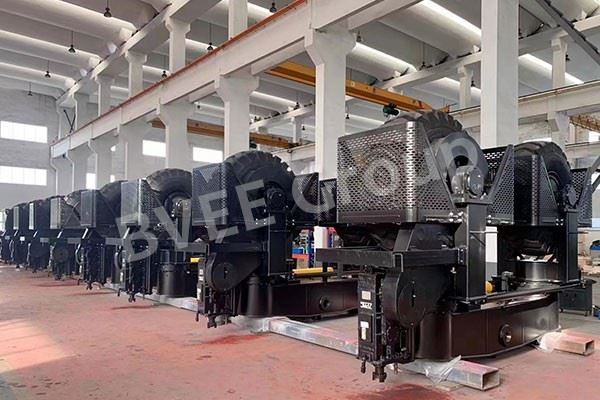
The noise also depends on the age and condition of the spreader. A brand - new spreader is likely to be quieter than an old one. Over time, the parts of the spreader wear out. The bearings might start to get loose, the gears can get worn down, and the hydraulic seals can leak. All these issues can lead to increased noise levels. For instance, a worn - out bearing can make a screeching noise as it rotates, which is really annoying and can also be a sign that it needs to be replaced.
The environment in which the spreader operates also matters. If the port is in a windy area, the wind can interact with the spreader and create additional noise. The wind can cause the spreader to vibrate, and this vibration can generate a whistling or rattling sound. Also, if the spreader is operating near other noisy equipment, like other cranes or trucks, it can be hard to isolate the spreader's noise.
So, how do we measure the noise levels of a port crane spreader? Well, we use a sound level meter. This device is pretty simple to use. You just place it at a certain distance from the spreader, usually around 1 - 2 meters away, and it measures the sound pressure level in decibels (dB).
Typically, the noise level of a port crane spreader during normal operation can range from 70 dB to 90 dB. To put that into perspective, 70 dB is about as loud as a vacuum cleaner, while 90 dB is similar to the noise of a lawnmower. Prolonged exposure to noise levels above 85 dB can cause hearing damage, so it's important to take precautions.
For workers who are around the spreader all day, wearing hearing protection is a must. Earplugs or earmuffs can significantly reduce the amount of noise that reaches their ears. And for the port management, they can also take steps to reduce the overall noise pollution. For example, they can install noise - absorbing materials around the crane area. These materials can soak up some of the sound waves and make the environment a bit quieter.
As a supplier, we're constantly working on reducing the noise levels of our port crane spreaders. We invest in research and development to come up with better designs. For example, we're looking into using quieter motors and more efficient hydraulic systems. By using high - quality materials and precision - engineered parts, we can minimize the wear and tear on the spreader, which in turn reduces the noise.
We also offer regular maintenance services for our spreaders. During these maintenance checks, our technicians can identify and fix any issues that might be causing excessive noise. They can lubricate the moving parts, tighten the loose bolts, and replace the worn - out components. This not only reduces the noise but also extends the lifespan of the spreader.
If you're in the market for a port crane spreader, noise levels should be one of the factors you consider. A quieter spreader can make the working environment more pleasant for the port workers. It can also reduce the overall noise pollution in the port area, which is good for the surrounding community.
If you're interested in learning more about our Port Crane Spreader and how we can help you with noise - related issues, don't hesitate to reach out. We're always happy to have a chat about your specific needs and how our products can fit into your port operations. Whether you're looking for a new spreader or need maintenance for your existing one, we've got you covered. Let's start a conversation and see how we can make your port operations more efficient and quieter.
References
- Industrial Noise Control Handbook, 3rd Edition
- Port Equipment Noise Standards and Guidelines, published by an industry - related organization


