

In the dynamic world of container handling and port operations, headblock spreaders play a pivotal role in ensuring the efficient and safe transfer of containers. As a dedicated headblock spreader supplier, I understand the critical importance of quality control during the production process. This blog post will delve into the comprehensive quality control measures we implement to guarantee the reliability and performance of our headblock spreaders.
Raw Material Inspection
The foundation of a high - quality headblock spreader lies in the selection and inspection of raw materials. We source our materials from trusted suppliers who meet strict quality standards. When the raw materials arrive at our production facility, a thorough inspection is carried out.
For steel components, which are the backbone of the headblock spreader, we check for chemical composition and mechanical properties. We use advanced testing equipment such as spectrometers to analyze the chemical elements in the steel. This ensures that the steel has the right balance of carbon, manganese, and other elements, which directly affects its strength, ductility, and corrosion resistance.
In addition to chemical analysis, we perform mechanical tests like tensile tests and hardness tests. Tensile tests measure the maximum stress a material can withstand before breaking, while hardness tests determine the material's resistance to indentation. Only materials that meet our pre - defined specifications are allowed to enter the production process.
Design and Engineering Review
Before the actual production begins, our design and engineering team conducts a detailed review of the headblock spreader design. We use state - of - the - art computer - aided design (CAD) software to create 3D models of the spreader. These models are then analyzed using finite element analysis (FEA) software to simulate how the spreader will perform under different loads and conditions.
The FEA analysis helps us identify potential weak points in the design, such as areas of high stress concentration. Based on the results of the analysis, we make necessary design modifications to optimize the spreader's performance and durability. Our design review also includes a compliance check with international standards and regulations, such as ISO standards for container handling equipment.
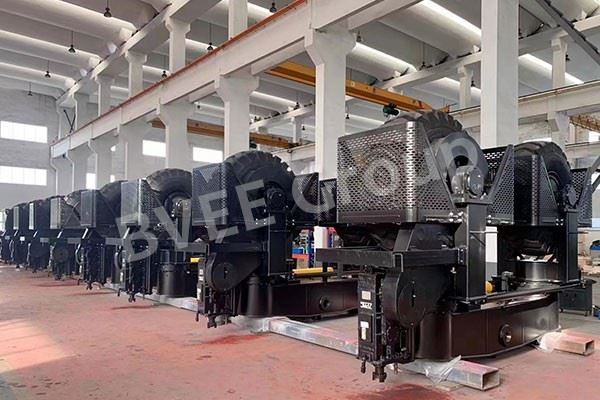

Manufacturing Process Control
During the manufacturing process, we implement strict process control measures to ensure consistency and quality. Each manufacturing step is carefully monitored and documented.
For example, in the welding process, which is crucial for joining different components of the headblock spreader, we have certified welders who follow a standardized welding procedure. Welding parameters such as current, voltage, and welding speed are precisely controlled to ensure strong and reliable welds. After welding, non - destructive testing methods like ultrasonic testing and magnetic particle testing are used to detect any internal defects in the welds.
In the machining process, we use high - precision CNC machines to ensure accurate dimensions of the components. The machining operations are closely monitored, and regular inspections are carried out to verify that the components meet the design specifications. Any deviations from the specifications are immediately addressed to prevent quality issues.
Assembly and Integration
Once all the components are manufactured, they are assembled into the final headblock spreader. During the assembly process, we follow a detailed assembly plan to ensure that all components are correctly installed and aligned.
We also pay special attention to the integration of electrical and hydraulic systems. These systems are essential for the operation of the headblock spreader, and any malfunction can lead to serious problems. Before the final assembly, the electrical and hydraulic components are individually tested to ensure their proper functioning. After assembly, a comprehensive system test is conducted to check the overall performance of the spreader.
Testing and Certification
After the assembly is complete, the headblock spreader undergoes a series of rigorous tests. These tests include static load tests, dynamic load tests, and functional tests.
In the static load test, the spreader is loaded with a specified weight to simulate the maximum load it will encounter during normal operation. The spreader is then monitored for any signs of deformation or structural failure. The dynamic load test involves moving the spreader with a load to test its performance under real - world operating conditions.
Functional tests are carried out to verify that all the functions of the spreader, such as container locking and unlocking, telescoping, and rotation, work properly. Only after passing all these tests does the headblock spreader receive our internal quality certification.
In addition to our internal testing, we also seek external certification from recognized certification bodies. This external certification provides an independent verification of the spreader's quality and compliance with international standards.
Quality Assurance Documentation
Throughout the production process, we maintain detailed quality assurance documentation. This documentation includes inspection reports, test results, and manufacturing records. The documentation serves as a traceability tool, allowing us to track the history of each headblock spreader from the raw material stage to the final product.
In case of any quality issues or customer feedback, the documentation helps us quickly identify the root cause and take appropriate corrective actions. It also provides transparency to our customers, giving them confidence in the quality of our products.
Continuous Improvement
Quality control is not a one - time activity but an ongoing process. We regularly review our quality control measures and production processes to identify areas for improvement.
We collect feedback from our customers, as well as data from our internal quality monitoring systems. Based on this feedback and data, we implement changes to our processes, designs, and testing methods. This continuous improvement approach ensures that our headblock spreaders are always at the forefront of quality and performance.
Conclusion
As a headblock spreader supplier, we are committed to providing our customers with high - quality products. Our comprehensive quality control measures, from raw material inspection to final testing and certification, ensure that each headblock spreader we produce meets the highest standards of quality and reliability.
If you are in the market for a headblock spreader, Headblock Spreader or other related products such as Port Crane Spreader and Hook Beam Spreader, we invite you to contact us for more information and to discuss your specific requirements. We are ready to work with you to provide the best container handling solutions.
References
- ISO standards for container handling equipment
- Industry best practices in quality control for heavy machinery manufacturing


