As a seasoned supplier of crane hoist drums, I've witnessed firsthand the critical role these components play in the seamless operation of cranes. A crane hoist drum is the heart of any lifting system, responsible for winding and unwinding the wire rope to elevate and lower heavy loads. However, like any mechanical part, it is subject to wear and tear over time. Recognizing the signs of a damaged crane hoist drum is crucial for maintaining safety and efficiency in your lifting operations.
Surface Irregularities
One of the most apparent signs of a damaged crane hoist drum is surface irregularities. Over time, the constant friction between the wire rope and the drum surface can cause abrasion, pitting, and scoring. These imperfections not only reduce the drum's lifespan but can also lead to premature wear of the wire rope. When inspecting the drum surface, look for rough patches, deep scratches, or areas where the metal has been worn down. If you notice any of these signs, it may be time to consider replacing the drum or having it resurfaced.


Another surface irregularity to watch out for is corrosion. Exposure to moisture, chemicals, and harsh environmental conditions can cause the drum to rust and corrode. Corrosion weakens the structural integrity of the drum, making it more susceptible to failure. Check for signs of rust, flaking paint, or discoloration on the drum surface. If corrosion is detected, it's essential to address the issue promptly to prevent further damage.
Misalignment
Proper alignment is crucial for the smooth operation of a crane hoist drum. Misalignment can occur due to improper installation, wear and tear on the bearings, or damage to the drum shaft. When the drum is misaligned, the wire rope may not wind evenly, causing it to rub against the sides of the drum or other components. This can lead to excessive wear on the rope, as well as premature failure of the drum and other parts of the lifting system.
To check for misalignment, look for signs of uneven wear on the wire rope or the drum surface. You may also notice that the rope is not winding or unwinding smoothly, or that there is excessive vibration or noise during operation. If you suspect misalignment, it's important to have the drum inspected and realigned by a qualified technician as soon as possible.
Cracks and Fractures
Cracks and fractures are serious signs of damage to a crane hoist drum. They can occur due to overloading, fatigue, or impact. Cracks can start small and gradually grow over time, eventually leading to complete failure of the drum. This can result in a catastrophic accident, causing damage to the crane, the load, and potentially endangering the lives of workers.
Regular visual inspections are essential for detecting cracks and fractures in the drum. Look for any visible signs of cracks, such as hairline fractures or larger cracks that may be accompanied by distortion or bulging of the drum surface. If you suspect a crack, it's important to stop using the crane immediately and have the drum inspected by a qualified engineer. Depending on the severity of the damage, the drum may need to be replaced or repaired.
Excessive Wear on the Grooves
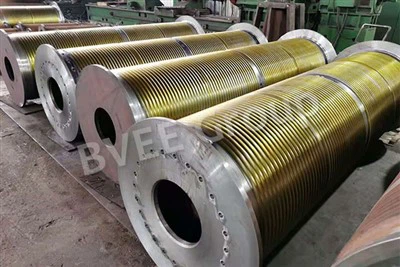
The grooves on a crane hoist drum are designed to guide the wire rope evenly and prevent it from slipping. Over time, the grooves can wear down due to the constant friction and pressure of the wire rope. Excessive wear on the grooves can cause the wire rope to ride up on the edges of the grooves, leading to uneven winding and increased stress on the rope. This can result in premature wear and failure of the rope, as well as damage to the drum.
To check for excessive wear on the grooves, measure the depth of the grooves using a groove gauge. If the groove depth is less than the manufacturer's recommended specifications, it may be time to replace the drum. You may also notice signs of uneven wear or deformation of the grooves, which can indicate a problem with the alignment or tension of the wire rope.
Bearing Issues
The bearings in a crane hoist drum are responsible for supporting the drum and allowing it to rotate smoothly. Over time, the bearings can wear out due to the constant load and friction. Signs of bearing issues include excessive noise, vibration, or heat during operation. You may also notice that the drum is difficult to rotate or that there is play in the bearings.
If you suspect bearing issues, it's important to have the bearings inspected and replaced as soon as possible. Ignoring bearing problems can lead to further damage to the drum and other components of the lifting system, as well as increase the risk of a catastrophic failure.
Importance of Regular Inspections
Regular inspections are essential for detecting the signs of a damaged crane hoist drum before they lead to serious problems. By implementing a comprehensive inspection program, you can identify potential issues early on and take corrective action to prevent costly repairs and downtime. Inspections should be conducted by qualified technicians who are familiar with the specific requirements of your crane and hoist drum.
In addition to regular visual inspections, it's also important to perform non-destructive testing (NDT) on the drum periodically. NDT techniques, such as ultrasonic testing and magnetic particle inspection, can detect internal cracks and other defects that may not be visible to the naked eye. By using these advanced testing methods, you can ensure the safety and reliability of your crane hoist drum.
Contact Us for Quality Crane Hoist Drums
At [Our Company], we understand the importance of providing high-quality crane hoist drums that meet the needs of our customers. We offer a wide range of STS Crane Hoist Drum and Crane Wire Rope Drum to suit various applications and industries. Our drums are manufactured to the highest standards using the latest technology and materials, ensuring durability, reliability, and performance.
If you're experiencing any of the signs of a damaged crane hoist drum or are in need of a new drum, don't hesitate to contact us. Our team of experts is available to provide you with professional advice and assistance, as well as to help you select the right drum for your specific requirements. We can also offer installation, maintenance, and repair services to ensure the optimal performance of your crane hoist drum.
References
- ASME B30.21 - Overhead and Gantry Cranes (Top Running Bridge, Single or Multiple Girder, Top Running Trolley Hoist)
- OSHA 1910.179 - Overhead and Gantry Cranes (Top Running Bridge, Single or Multiple Girder, Top Running Trolley Hoist)
- Crane Manufacturers Association of America (CMAA) Specifications