

In the bustling world of port operations, the efficiency and safety of container handling are paramount. Port crane spreaders play a crucial role in this process, serving as the interface between the crane and the containers. Among the various types of port crane spreaders, fixed and adjustable spreaders are two commonly used options. As a provider of high - quality port crane spreaders, I am well - versed in the differences between these two types, and I'm excited to share this knowledge with you.
Structural Design
The most obvious difference between fixed and adjustable port crane spreaders lies in their structural design. A fixed port crane spreader has a rigid structure with a set width and configuration. It is designed to handle containers of a specific size. For example, a fixed spreader might be built to handle only 20 - foot or 40 - foot containers. Once manufactured, its dimensions cannot be easily changed. This simplicity in design makes it relatively straightforward to construct and maintain.
On the other hand, an adjustable port crane spreader is a more complex piece of equipment. It is equipped with mechanisms that allow it to change its width and sometimes its overall configuration. This adaptability enables it to handle containers of different sizes, such as 20 - foot, 40 - foot, and even 45 - foot containers. The adjustable spreader usually has telescopic arms or other adjustable components that can be extended or retracted as needed. For instance, when a 20 - foot container needs to be lifted, the spreader can be adjusted to a narrower width, and when a 40 - foot container is the target, it can be expanded accordingly.
Operational Flexibility
Operational flexibility is a key factor in determining which type of spreader to choose. Fixed spreaders offer limited flexibility. Since they are designed for a specific container size, they are most suitable for ports or terminals where the majority of the containers handled are of the same size. For example, a port that mainly deals with 40 - foot containers for long - haul shipping might find a fixed 40 - foot spreader to be the most efficient option. It can be quickly attached to the crane and start the lifting process without any adjustments, which can save time in a high - volume operation.
However, in a more diverse port environment where containers of various sizes arrive and depart regularly, an adjustable spreader is the clear winner. With its ability to adapt to different container sizes, it eliminates the need to switch between multiple fixed spreaders. This not only saves time but also reduces the storage space required for different spreaders. For example, a transshipment port that handles a mix of 20 - foot, 40 - foot, and 45 - foot containers can use a single adjustable spreader to handle all these types of containers, increasing the overall efficiency of the port operations.
Cost Considerations
Cost is always an important factor in any business decision. Fixed port crane spreaders generally have a lower initial cost compared to adjustable spreaders. The simpler design and fewer components of fixed spreaders result in lower manufacturing costs. Additionally, their maintenance costs are also relatively low since there are fewer moving parts that can wear out or malfunction. For smaller ports or terminals with a limited budget and a relatively consistent container size, a fixed spreader can be a cost - effective choice.
Adjustable spreaders, on the other hand, are more expensive to purchase initially. The complex mechanisms required for adjustability add to the manufacturing cost. However, when considering the long - term cost, an adjustable spreader can be more economical in certain situations. In a port with a diverse container mix, the cost of purchasing multiple fixed spreaders to handle different container sizes can be much higher than the cost of a single adjustable spreader. Moreover, the time saved in not having to switch between spreaders can lead to increased productivity and potentially higher revenue.
Safety and Reliability
Safety is of utmost importance in port operations. Fixed spreaders are known for their high reliability. Since they have a simple and stable structure, there are fewer opportunities for mechanical failures. The lack of moving parts in the width - adjustment mechanism reduces the risk of malfunctions during operation. This makes them a safe choice for handling containers, especially in high - volume and high - stress environments.
Adjustable spreaders, while offering greater flexibility, do have some additional safety considerations. The moving parts in the adjustable mechanism need to be regularly maintained to ensure proper operation. If not maintained correctly, there is a risk of the adjustment mechanism failing during a lift, which could lead to container drops or other safety incidents. However, modern adjustable spreaders are equipped with advanced safety features such as locking mechanisms and sensors to prevent such failures. When properly maintained, adjustable spreaders can also provide a high level of safety.
Compatibility with Cranes
Both fixed and adjustable spreaders need to be compatible with the cranes they are used with. Fixed spreaders are often designed to be directly compatible with specific crane models. The connection between the fixed spreader and the crane is usually a simple and standardized one, which ensures a stable and reliable lifting operation.
Adjustable spreaders, due to their more complex design, may require more careful consideration of crane compatibility. The additional weight and the movement of the adjustable components can affect the balance and performance of the crane. Therefore, when choosing an adjustable spreader, it is essential to ensure that the crane has the necessary lifting capacity and stability to handle the spreader in all its adjustable configurations.
Applications in Different Port Scenarios
In ports that handle a large volume of a single container size, such as those specialized in exporting a particular type of product in standardized containers, fixed spreaders are the ideal choice. For example, a port that mainly exports automobiles in 40 - foot containers can use fixed 40 - foot spreaders to achieve high - speed and efficient container handling.
In contrast, ports that serve as transshipment hubs or handle a wide variety of container sizes from different sources are better off with adjustable spreaders. These ports receive containers of different sizes from various vessels and need to transfer them to other destinations. An adjustable spreader can quickly adapt to the different container sizes, allowing for seamless handling of the diverse container mix.
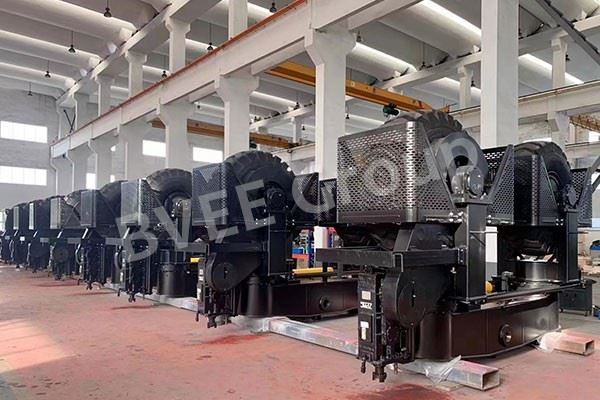

Our Product Offerings
As a leading provider of port crane spreaders, we offer both fixed and adjustable spreaders to meet the diverse needs of our customers. Our Port Crane Spreader range includes high - quality fixed spreaders that are designed for specific container sizes. These spreaders are built with robust materials and advanced manufacturing techniques to ensure long - term reliability and safety.
We also offer a wide selection of adjustable spreaders, such as our Hook Beam Spreader and Headblock Spreader. These adjustable spreaders are equipped with state - of - the - art adjustment mechanisms and safety features to provide maximum flexibility and safety in container handling.
Conclusion
In conclusion, the choice between a fixed and an adjustable port crane spreader depends on several factors, including the container mix at the port, the budget, the required operational flexibility, and safety considerations. Fixed spreaders are a great option for ports with a consistent container size, offering simplicity, reliability, and low cost. Adjustable spreaders, on the other hand, are more suitable for ports with a diverse container mix, providing the flexibility needed to handle different container sizes efficiently.
If you are in the market for a port crane spreader, we invite you to contact us for a detailed discussion of your specific needs. Our team of experts is ready to assist you in choosing the right spreader for your port operations. Whether you need a fixed spreader for a specialized application or an adjustable spreader for a more versatile operation, we have the solutions to meet your requirements. Let's work together to enhance the efficiency and safety of your port container handling.
References
- Port Equipment Handbook: A comprehensive guide to port machinery and equipment, including spreaders.
- Journal of Maritime Engineering: Articles on the latest developments in port crane spreader technology.
- International Association of Ports and Harbors (IAPH) publications: Insights into best practices in port operations and equipment selection.


