

Hey there! As a hook beam spreader supplier, I often get asked about the lifespan of these nifty pieces of equipment. So, I thought I'd sit down and write a blog post to share what I know.
First off, let's talk about what a hook beam spreader is. It's a crucial tool in the material handling industry, especially in ports and warehouses. It's used to lift and move heavy loads, like containers, by hooking onto them. You can check out more about Hook Beam Spreader on our website.
Now, the lifespan of a hook beam spreader isn't set in stone. It depends on a bunch of factors. One of the biggest factors is how often it's used. If it's in constant use, say, in a busy port where there are containers being moved around the clock, it's going to wear out faster than one that's used only occasionally in a smaller warehouse.
Another important factor is the environment in which it operates. If it's used in a harsh environment, like a port where it's exposed to saltwater, high humidity, and extreme temperatures, it's going to face more corrosion and damage. On the other hand, if it's used in a controlled indoor environment, it'll likely last longer.
The quality of the hook beam spreader also plays a huge role. High - quality spreaders are made from better materials and are built to withstand more wear and tear. At our company, we take pride in using top - notch materials and advanced manufacturing techniques to ensure our hook beam spreaders are durable.
Let's break down these factors a bit more.
Usage Frequency
If a hook beam spreader is used multiple times a day, every day, the components are going to experience a lot of stress. The hooks, for example, are constantly being engaged and disengaged from the loads. Over time, this repeated action can cause the hooks to wear down. The same goes for the lifting mechanisms and the structural parts of the spreader.
On average, a hook beam spreader that's used heavily in a busy port might have a lifespan of around 10 - 15 years. This is assuming that it undergoes regular maintenance. But if the maintenance is lacking, the lifespan could be significantly shorter, maybe even as little as 5 - 7 years.
In contrast, a hook beam spreader that's used only a few times a week in a less demanding environment could last 15 - 20 years or even more.
Operating Environment
As I mentioned earlier, the environment can really take a toll on a hook beam spreader. In a coastal port, the spreader is constantly exposed to saltwater spray. Saltwater is extremely corrosive, and it can eat away at the metal parts of the spreader. The high humidity also promotes rusting.
To combat this, we often recommend using anti - corrosion coatings on our hook beam spreaders. These coatings act as a barrier between the metal and the corrosive elements in the environment. But even with these coatings, the spreader still needs to be inspected regularly for signs of corrosion.
In an indoor environment, the spreader is protected from the elements, but it still needs to be kept clean. Dust and debris can accumulate on the moving parts, which can cause them to wear out faster.

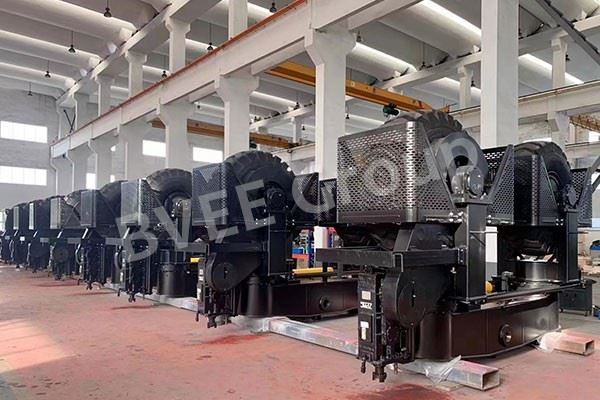
Quality of the Spreader
When you invest in a high - quality hook beam spreader, you're essentially investing in its longevity. We use high - strength steel for the structural parts of our spreaders. This steel can withstand heavy loads and resist deformation.
The hooks are also made from special alloys that are designed to be tough and durable. They're heat - treated to increase their hardness and wear resistance.
We also pay close attention to the manufacturing process. Our spreaders are precision - engineered to ensure that all the components fit together perfectly. This reduces the amount of stress on individual parts and helps to extend the overall lifespan of the spreader.
Maintenance
Regular maintenance is the key to maximizing the lifespan of a hook beam spreader. This includes things like lubricating the moving parts, checking the hooks for wear and damage, and inspecting the structural integrity of the spreader.
We recommend having a maintenance schedule in place. For example, the spreader should be lubricated at least once a month, depending on the usage. The hooks should be inspected every three months, and a full structural inspection should be done at least once a year.
If any issues are found during the maintenance checks, they should be addressed immediately. Ignoring small problems can lead to bigger, more expensive issues down the road.
Comparing with Other Spreaders
There are other types of spreaders out there, like Port Crane Spreader and Headblock Spreader. Each type has its own lifespan characteristics.
Port crane spreaders are often used in large - scale port operations. They're designed to handle extremely heavy loads. Due to the high - stress nature of their use, their lifespan might be similar to that of a heavily - used hook beam spreader, around 10 - 15 years with proper maintenance.
Headblock spreaders are used in more specialized applications. They're often more compact and might have a slightly longer lifespan if used in a less demanding environment, maybe 15 - 20 years.
Conclusion
So, to sum it up, the lifespan of a hook beam spreader can vary widely depending on usage frequency, operating environment, quality, and maintenance. On average, with proper care, you can expect a hook beam spreader to last anywhere from 10 to 20 years.
If you're in the market for a hook beam spreader or have any questions about their lifespan or maintenance, don't hesitate to reach out. We're here to help you make the best choice for your material - handling needs. Whether you're running a small warehouse or a large port, we've got the right hook beam spreader for you.
References
- Material Handling Handbook, Third Edition
- Journal of Port and Ocean Engineering


