

As a leading provider of hook beam spreaders, I've had the privilege of witnessing firsthand the critical role these devices play in the heavy - lifting operations within ports and industrial settings. One of the most frequently asked questions regarding hook beam spreaders is about their load - sharing mechanism. In this blog, I'll delve into the details of this mechanism, explaining how it works and why it's so important.
Understanding the Basics of Hook Beam Spreaders
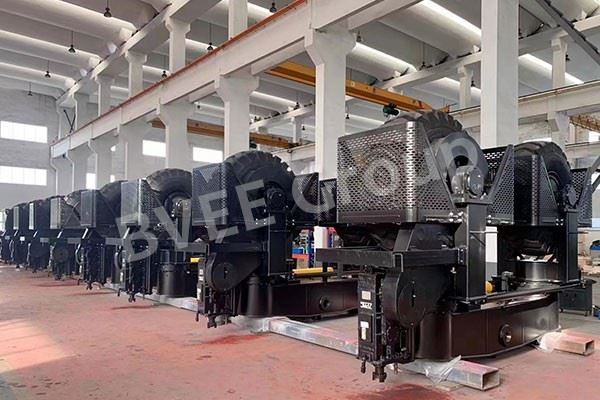
Before we dive into the load - sharing mechanism, let's briefly understand what a hook beam spreader is. A hook beam spreader is a specialized lifting device used primarily in container handling at ports and in other heavy - industry applications. It is designed to lift and move heavy loads, such as shipping containers, safely and efficiently. Our Hook Beam Spreader is engineered with precision to meet the high - demand requirements of modern logistics and industrial operations.
The Importance of Load - Sharing
Load - sharing is a fundamental principle in the design and operation of hook beam spreaders. When a spreader lifts a load, the weight of the load must be distributed evenly across its structure. Uneven load distribution can lead to a variety of problems, including structural damage to the spreader, instability during lifting, and potential safety hazards. For example, if one side of the spreader bears significantly more weight than the other, it can cause the spreader to tilt, increasing the risk of the load falling or the spreader itself failing.
Components Involved in Load - Sharing
Several key components work together to ensure proper load - sharing in a hook beam spreader.
Hooks
The hooks are the primary contact points between the spreader and the load. They are designed to securely grip the load and transfer the weight to the rest of the spreader structure. Our hooks are made from high - strength materials and are precisely engineered to distribute the load evenly. Each hook is carefully calibrated to handle a specific portion of the total load, based on the design of the spreader and the expected weight distribution.
Beams
The beams of the hook beam spreader act as the main load - bearing members. They are typically made of steel or other strong alloys and are designed to withstand the forces exerted by the load. The shape and size of the beams are optimized to distribute the load evenly along their length. For instance, in a well - designed hook beam spreader, the beams are tapered or have a specific cross - sectional shape that helps to transfer the load from the hooks to the lifting points in a balanced manner.
Lifting Points
The lifting points are where the spreader is attached to the crane or other lifting equipment. These points are strategically located to ensure that the load is evenly supported during lifting. Our hook beam spreaders are designed with multiple lifting points, which are carefully positioned to balance the load and minimize stress on any single point. This helps to prevent overloading of the lifting equipment and ensures a smooth and stable lifting operation.
How the Load - Sharing Mechanism Works
When a hook beam spreader is used to lift a load, the load - sharing mechanism begins to operate as soon as the hooks engage with the load.
Initial Engagement
As the hooks are lowered onto the load, they are designed to make contact with the load in a way that evenly distributes the initial load. The hooks are often equipped with features such as adjustable jaws or locking mechanisms that ensure a secure and balanced grip. Once the hooks are firmly attached to the load, the weight of the load starts to be transferred to the beams.
Load Transfer to the Beams
The beams of the spreader then take on the task of distributing the load. The load is transferred from the hooks to the beams through a combination of direct contact and internal forces within the spreader structure. The beams are designed to flex slightly under the load, which helps to distribute the weight more evenly. This flexibility also allows the spreader to adapt to small variations in the load's shape and weight distribution.
Balancing at the Lifting Points
Finally, the load is transferred from the beams to the lifting points. The lifting points are connected to the crane or other lifting equipment, and they are designed to balance the load and ensure that the crane can lift the load safely. Our hook beam spreaders use advanced engineering techniques to ensure that the load is evenly distributed among the lifting points, minimizing the risk of overloading the crane.
Comparison with Other Types of Spreaders
It's also interesting to compare the load - sharing mechanism of hook beam spreaders with other types of spreaders, such as Port Crane Spreader and Headblock Spreader.
Port Crane Spreaders
Port crane spreaders are often used for handling large shipping containers. These spreaders typically have a more complex load - sharing mechanism, as they need to handle a wider range of container sizes and weights. They may use hydraulic or pneumatic systems to adjust the position of the lifting points and ensure even load distribution. In contrast, hook beam spreaders are more straightforward in their design and are often used for smaller or more specialized loads.
Headblock Spreaders
Headblock spreaders are commonly used in certain types of industrial applications. They are designed to lift loads from above and often have a different load - sharing mechanism compared to hook beam spreaders. Headblock spreaders may rely more on a centralized lifting point and a system of cables or chains to distribute the load, while hook beam spreaders use a combination of hooks, beams, and multiple lifting points.
The Benefits of Our Hook Beam Spreader's Load - Sharing Mechanism
Our hook beam spreaders offer several benefits thanks to their advanced load - sharing mechanism.
Safety
By ensuring even load distribution, our spreaders minimize the risk of structural failure and load instability. This makes them a safer choice for lifting operations, reducing the potential for accidents and injuries.
Efficiency
The even load distribution also helps to improve the efficiency of the lifting process. A well - balanced load can be lifted more smoothly and quickly, reducing the time and effort required for each lifting operation.
Durability
Since the load is evenly distributed across the spreader's structure, there is less stress on individual components. This extends the lifespan of the spreader and reduces the need for frequent maintenance and repairs.

Conclusion
In conclusion, the load - sharing mechanism of a hook beam spreader is a complex but essential part of its design. By understanding how this mechanism works and the components involved, users can ensure that they are using the spreader safely and efficiently. Our company, as a hook beam spreader supplier, is committed to providing high - quality spreaders with advanced load - sharing mechanisms. If you are in the market for a hook beam spreader or have any questions about our products, we encourage you to contact us for a detailed discussion. Our team of experts is ready to assist you in finding the right solution for your lifting needs.
References
- "Lifting Equipment Design and Safety Standards", International Organization for Standardization (ISO)
- "Container Handling Technology", Port Technology International Journal
- "Engineering Principles of Heavy - Lifting Devices", American Society of Mechanical Engineers (ASME)


