Are there different types of trolley rails?
As a supplier of trolley rails, I often get asked this question. The answer is a resounding yes! Trolley rails come in a variety of types, each designed to meet specific needs and applications. In this blog post, I'll explore the different types of trolley rails available in the market and their unique features.
Light - Duty Trolley Rails
Light - duty trolley rails are typically used in applications where the load capacity is relatively low. These rails are often found in small workshops, light manufacturing facilities, or for residential use. They are usually made of mild steel, which makes them cost - effective and easy to install.
One of the key advantages of light - duty trolley rails is their flexibility. They can be easily cut and bent to fit the specific layout of the workspace. This makes them ideal for custom - built systems. However, due to their lower load - bearing capacity, they are not suitable for heavy - duty industrial applications.
Medium - Duty Trolley Rails
Medium - duty trolley rails strike a balance between load capacity and cost. They are commonly used in medium - sized manufacturing plants, warehouses, and some industrial settings. These rails are made from higher - grade steel than light - duty rails, which gives them a greater ability to withstand heavier loads.
Medium - duty trolley rails often have a more robust design. They may feature a wider base and a thicker profile, which distributes the load more evenly. This helps to prevent premature wear and tear, ensuring a longer service life. For example, in a medium - sized warehouse where goods are moved on a regular basis, medium - duty trolley rails can provide reliable performance.
Heavy - Duty Trolley Rails
Heavy - duty trolley rails are designed for the most demanding industrial applications. They are used in large manufacturing plants, ports, and heavy machinery facilities. These rails are constructed from high - strength steel alloys that can withstand extremely heavy loads and high - impact forces.
The design of heavy - duty trolley rails is optimized for durability. They have a large cross - sectional area and are often heat - treated to enhance their strength and hardness. In a port, for instance, where large cranes are used to load and unload cargo, heavy - duty trolley rails are essential to support the massive weight of the cranes and the cargo they carry.
Specialized Trolley Rails
In addition to the standard light, medium, and heavy - duty rails, there are also specialized trolley rails designed for specific applications.
A75 Long Rail
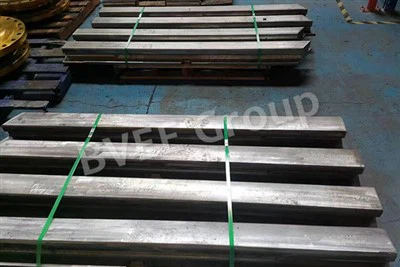
One such specialized rail is the A75 Long Rail. This rail is known for its long length and high strength. It is often used in applications where a continuous, smooth track is required over a long distance. The A75 Long Rail is commonly used in large - scale industrial conveyor systems, where it provides a stable and reliable path for the trolleys to move.


Port Gantry Crane Rail
Another specialized type is the Port Gantry Crane Rail. As the name suggests, this rail is specifically designed for port gantry cranes. These cranes operate in a harsh marine environment, where they are exposed to saltwater, high winds, and heavy loads. The Port Gantry Crane Rail is made from corrosion - resistant materials and has a special design to withstand the unique challenges of the port environment.
Factors to Consider When Choosing Trolley Rails
When selecting the right type of trolley rail for your application, several factors need to be considered.
Load Capacity
The most important factor is the load capacity. You need to determine the maximum weight that the trolley will carry. If you choose a rail with a load capacity that is too low, it can lead to premature failure and safety hazards. On the other hand, choosing a rail with an overly high load capacity can be costly and may not be necessary for your application.
Environment
The environment in which the trolley rail will be installed is also crucial. If the rail is going to be used in a corrosive environment, such as a chemical plant or a port, you need to choose a rail made from corrosion - resistant materials. In a dusty or dirty environment, you may need a rail with a design that prevents the accumulation of debris.
Track Length and Layout
The length and layout of the track also play a role in the selection process. For long - distance tracks, you may need a rail that can be easily joined together to form a continuous track. If the track has curves or bends, you need to choose a rail that can be bent or curved without compromising its integrity.
Installation and Maintenance
Proper installation and maintenance are essential for the optimal performance of trolley rails. During installation, it is important to ensure that the rails are level and properly aligned. Any misalignment can cause the trolleys to run unevenly, leading to increased wear and tear.
Regular maintenance is also necessary. This includes inspecting the rails for signs of wear, corrosion, or damage. Lubrication of the rails and the trolley wheels can help to reduce friction and extend the service life of the system.
Conclusion
In conclusion, there are indeed different types of trolley rails available, each with its own set of features and applications. Whether you need a light - duty rail for a small workshop or a heavy - duty rail for a large industrial facility, there is a solution out there for you. As a trolley rail supplier, I am committed to providing high - quality rails that meet the diverse needs of our customers.
If you are in the market for trolley rails and are unsure which type is right for your application, I encourage you to reach out to us for a consultation. Our team of experts can help you analyze your requirements and recommend the most suitable trolley rail solution. We look forward to discussing your project and working with you to ensure a successful installation.
References
- Crane Rail Handbook, Industry Standard Publication
- Steel Manufacturing and Application Guidelines, Metallurgical Institute