Hey there! I'm a supplier of crane sheaves, and today I wanna talk about the safety risks associated with a damaged crane sheave. As someone who's been in the business for quite some time, I've seen firsthand how a seemingly minor issue with a sheave can turn into a major safety hazard.
First off, let's understand what a crane sheave is. It's a grooved wheel that the cable or rope runs over on a crane. The sheave helps to guide the cable and change its direction, allowing the crane to lift and move heavy loads. It's a crucial component of any crane system, and when it gets damaged, things can go south real quick.
One of the most common safety risks of a damaged crane sheave is cable wear. When the sheave is damaged, the grooves might be uneven or have sharp edges. As the cable runs over these damaged areas, it experiences more friction and abrasion. This can cause the cable to wear out much faster than normal. A worn - out cable is weaker and more likely to break under the stress of lifting heavy loads. And if the cable breaks while the crane is in operation, it can lead to the load falling, which is extremely dangerous for anyone in the vicinity. For example, in a construction site, a falling load can cause serious injuries or even fatalities to workers on the ground.
Another risk is misalignment. A damaged sheave might not rotate smoothly or be properly aligned with the rest of the crane's cable system. This misalignment can cause the cable to jump out of the sheave's groove. Once the cable is out of the groove, it can get tangled with other parts of the crane or even snap. Even if the cable doesn't snap immediately, the misalignment can put extra stress on the crane's motor and other components, leading to premature wear and tear and potential breakdowns.
A damaged sheave can also affect the load's stability. The sheave is designed to keep the cable in place and ensure that the load is lifted and moved evenly. When the sheave is damaged, the load might not be balanced correctly. This can cause the load to sway or tilt during lifting and movement. A swaying or tilting load is not only difficult to control but also increases the risk of the load tipping over. In industrial settings where large and heavy equipment is being moved, an unbalanced load can cause significant damage to the surrounding infrastructure.
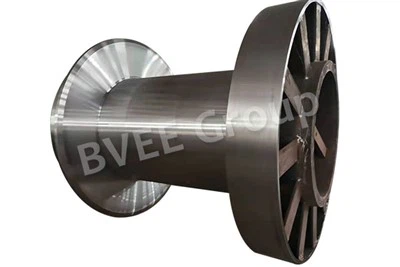
Now, let's talk about how to prevent these risks. Regular inspection is key. Crane operators should be trained to visually inspect the sheaves before each use. Look for signs of wear, such as cracks, dents, or uneven grooves. If any damage is detected, the sheave should be replaced immediately. And when it comes to replacement, it's important to choose high - quality sheaves. For instance, our Full Forging Sheave is made using a full forging process, which makes it stronger and more durable compared to other types of sheaves.

Full forging gives the sheave a more uniform internal structure, reducing the risk of cracks and other defects. It can withstand higher loads and more stress, which means it's less likely to get damaged during normal crane operation. So, if you're in the market for a reliable crane sheave, the full forging option is definitely worth considering.
In addition to regular inspections and using high - quality sheaves, proper maintenance is also essential. Keep the sheaves clean and lubricated. Dirt and debris can accumulate in the grooves and cause additional wear. Lubrication helps to reduce friction and keep the sheave rotating smoothly.
If you're experiencing any issues with your crane sheaves or are looking to upgrade to a more reliable option, don't hesitate to reach out. We've got a wide range of crane sheaves available, including the Full Forging Sheave, and our team of experts can help you find the perfect fit for your crane. Whether you're a small - scale construction company or a large industrial operation, we're here to provide you with the best products and support.
To sum it up, a damaged crane sheave poses significant safety risks, including cable wear, misalignment, and load instability. By conducting regular inspections, using high - quality sheaves like our full forging ones, and maintaining the sheaves properly, you can minimize these risks and ensure the safe operation of your crane. So, if you're concerned about the safety of your crane's sheave system, give us a call and let's start a conversation about how we can help.
References
- Crane Safety Manuals from Industry Standards
- Technical Guides on Crane Components and Maintenance