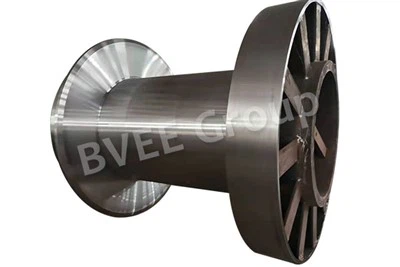
As a supplier of crane hoist drums, I often get asked about the materials used to make these crucial components. In this blog, I'll break down the common materials, their properties, and why they're chosen for different applications.
Steel
Steel is hands - down the most widely used material for crane hoist drums. It's a go - to because of its strength, durability, and relatively low cost compared to some other materials.
Carbon Steel
Carbon steel is a basic type of steel that contains carbon as the main alloying element. It's known for its high strength and good machinability. For crane hoist drums, carbon steel can handle heavy loads without deforming easily. It's also relatively easy to shape into the required drum design. Many standard crane hoist drums are made from carbon steel, especially those used in general industrial applications.
One of the great things about carbon steel is its availability. You can find it in different grades, allowing manufacturers to choose the one that best suits the specific requirements of the hoist drum. For example, in a medium - duty overhead crane, a medium - carbon steel drum might be used. It can withstand the repeated stress of lifting and lowering loads over time.
Alloy Steel
Alloy steel takes things a step further by adding other elements like chromium, nickel, and molybdenum to the steel. This results in enhanced properties such as increased hardness, toughness, and corrosion resistance.
In applications where the crane hoist drum is exposed to harsh environments or needs to handle extremely heavy loads, alloy steel is the way to go. For instance, in a mining operation, where the drums are constantly in contact with abrasive materials and are subject to high - impact forces, an alloy steel drum can offer better performance and a longer service life.
Cast Iron
Cast iron is another material that's used for crane hoist drums, although not as commonly as steel. It has some unique properties that make it suitable for certain applications.
Gray Cast Iron
Gray cast iron is known for its good damping capacity. This means it can absorb vibrations, which is beneficial in a crane hoist system. When the hoist is in operation, there are often vibrations generated by the movement of the load and the machinery. A gray cast iron drum can help reduce these vibrations, leading to a smoother operation.
It also has good machinability, which makes it easier to manufacture the drum with the required precision. However, gray cast iron is relatively brittle compared to steel, so it's usually used in lighter - duty applications where the loads are not extremely high.


Ductile Cast Iron
Ductile cast iron is an improvement over gray cast iron. It has higher ductility, which means it can deform under stress without breaking. This makes it more suitable for applications where the drum may be subject to some degree of shock loading.
Ductile cast iron drums can be found in some medium - duty cranes, where they offer a good balance between cost, performance, and durability.
Aluminum
Aluminum is a lightweight material that's gaining popularity in the crane hoist drum industry. It has several advantages, especially in applications where weight is a concern.
Aluminum has a high strength - to - weight ratio, which means it can provide sufficient strength while being much lighter than steel or cast iron. This is particularly useful in mobile cranes, where reducing the weight of the hoist drum can improve the overall mobility and fuel efficiency of the crane.
It's also highly corrosion - resistant, making it a good choice for outdoor applications or environments where the drum may be exposed to moisture or chemicals. However, aluminum is not as strong as steel, so it's typically used in lighter - duty hoist systems.
Composite Materials
Composite materials are a relatively new addition to the list of materials used for crane hoist drums. They are made by combining two or more different materials to create a material with enhanced properties.
One common type of composite used is fiberglass - reinforced plastic (FRP). FRP has high strength, low weight, and excellent corrosion resistance. It can be molded into complex shapes, which allows for more innovative drum designs.
In some high - tech or specialized crane applications, composite drums are being used. For example, in clean - room environments where metal particles from steel or cast iron drums could contaminate the products, FRP drums are a great alternative.
Choosing the Right Material
When it comes to choosing the material for a crane hoist drum, several factors need to be considered.
The load capacity is a crucial factor. If the crane is going to be lifting heavy loads on a regular basis, steel, especially alloy steel, is likely the best choice. On the other hand, for lighter loads, aluminum or cast iron might be sufficient.
The environment in which the crane operates also plays a role. In a corrosive environment, materials like aluminum or composite materials with good corrosion resistance are preferred. In a high - vibration environment, gray cast iron or a material with good damping properties could be the way to go.
Cost is always a consideration as well. Steel is generally more cost - effective for most applications, but in some cases, the benefits of using a more expensive material like composite materials may outweigh the cost.
Our Offerings
At our company, we understand the importance of choosing the right material for crane hoist drums. We offer a wide range of drums made from different materials to meet the diverse needs of our customers.
If you're looking for a heavy - duty drum for a large - scale industrial crane, our STS Crane Hoist Drum made from high - quality alloy steel is a great option. It's designed to withstand extreme loads and harsh operating conditions.
For more general - purpose applications, our Crane Wire Rope Drum made from carbon steel provides a reliable and cost - effective solution.
We're committed to providing the best quality crane hoist drums at competitive prices. Whether you're in the manufacturing, mining, or construction industry, we have the right drum for your needs.
If you're interested in learning more about our products or need help choosing the right material for your crane hoist drum, don't hesitate to reach out. We're here to assist you with all your procurement needs and look forward to starting a great business relationship with you.
References
- ASM Handbook Volume 1: Properties and Selection: Irons, Steels, and High - Performance Alloys
- Machinery's Handbook, 31st Edition