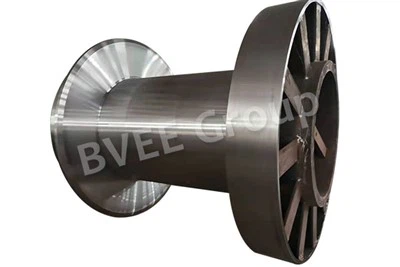
As a well - established supplier of bogie structures, I understand the critical importance of ensuring the quality and reliability of these essential components. In the world of container gantry cranes, bogie structures play a pivotal role in the smooth and safe operation of cranes, such as STS (Ship - to - Shore) and RTG (Rubber - Tyred Gantry) cranes. In this blog, I will delve into the various inspection methods for bogie structures that we, as a supplier, use to maintain the highest standards.
Visual Inspection
Visual inspection is the most basic yet crucial step in examining bogie structures. It is a non - destructive and cost - effective method that can be carried out regularly. Our experienced technicians visually check for any signs of wear, corrosion, cracks, or deformation on the surface of the bogie.
When inspecting for wear, we pay close attention to the contact areas between different components. For example, the wheels of the bogie are in constant contact with the rails. Excessive wear on the wheel tread can lead to uneven movement, vibration, and even derailment. We look for signs of flat spots, excessive groove formation, or uneven wear patterns.
Corrosion is another common issue that can weaken the structure. In environments where the cranes are exposed to harsh weather conditions or saltwater, the bogie structure is more prone to corrosion. We check for rust spots, blistering of paint, and any signs of material degradation due to corrosion. If corrosion is detected early, appropriate measures such as painting, coating, or replacement of affected parts can be taken.
Cracks and deformation are the most serious problems that visual inspection aims to identify. Cracks can start small and gradually propagate under the influence of stress, leading to catastrophic failure. We carefully examine the welds, joints, and high - stress areas of the bogie for any visible cracks. Deformation, such as bending or twisting of the frame, can also be identified visually. Any deviation from the original design dimensions can indicate a problem that needs to be addressed immediately. You can learn more about Bogie Structure on our website Bogie Structure.
Non - Destructive Testing (NDT)
In addition to visual inspection, we also employ various non - destructive testing methods to detect internal flaws in the bogie structure. These methods are used to inspect areas that are not visible to the naked eye.
Ultrasonic Testing (UT)
Ultrasonic testing uses high - frequency sound waves to detect internal flaws in the material. A transducer is placed on the surface of the bogie structure, and it sends ultrasonic waves into the material. When these waves encounter a flaw, such as a crack or a void, part of the wave is reflected back. The time it takes for the reflected wave to return and the amplitude of the signal are analyzed to determine the size, location, and orientation of the flaw.
UT is particularly useful for detecting flaws in thick sections of the bogie, such as the main frame and the axles. It can detect flaws that are hidden beneath the surface, which may not be detected by visual inspection. This method is fast, accurate, and can be used on a wide range of materials commonly used in bogie structures, such as steel.
Magnetic Particle Testing (MT)
Magnetic particle testing is used to detect surface and near - surface flaws in ferromagnetic materials, such as the steel used in bogie structures. A magnetic field is applied to the test area, and iron particles are then sprinkled on the surface. If there is a flaw, the magnetic field will be distorted, and the iron particles will be attracted to the area of the flaw, forming a visible indication.
MT is a relatively simple and inexpensive method for detecting surface cracks. It is sensitive to small cracks and can be used on complex - shaped components. However, it is only suitable for ferromagnetic materials, and it can only detect flaws that are close to the surface.
Dye Penetrant Testing (PT)
Dye penetrant testing is another non - destructive method used to detect surface - opening flaws. The surface of the bogie structure is first cleaned to remove any dirt, oil, or grease. A colored dye penetrant is then applied to the surface and allowed to penetrate into any cracks or pores for a specific period. After the penetrant has been removed from the surface, a developer is applied. The developer draws out the penetrant from the flaws, making them visible as colored indications.
PT is a sensitive method for detecting surface cracks in a variety of materials. It can be used on both metallic and non - metallic materials. However, it requires careful surface preparation and can only detect flaws that are open to the surface.
Dimensional Inspection
Dimensional inspection is essential to ensure that the bogie structure meets the design specifications. We use precision measuring tools such as calipers, micrometers, and coordinate measuring machines (CMM) to measure various dimensions of the bogie.


The correct dimensions are crucial for the proper fit and function of the bogie. For example, the wheelbase, the diameter of the wheels, and the width of the frame must be within the specified tolerances. Any deviation from the design dimensions can affect the alignment of the wheels, the smoothness of the movement, and the overall performance of the crane.
By regularly conducting dimensional inspections, we can detect any changes in the dimensions of the bogie over time. This can be due to factors such as wear, deformation, or improper installation. If necessary, adjustments can be made or parts can be replaced to ensure that the bogie structure continues to function properly. You can find more information about the related components in Container Gantry Crane Travelling Mechanism.
Operational Inspection
Operational inspection involves observing the bogie structure during normal operation of the crane. This method allows us to assess the performance of the bogie under real - world conditions.
We monitor the movement of the bogie for any signs of abnormal vibration, noise, or jerking. Abnormal vibration can be an indication of unbalanced wheels, misaligned axles, or worn - out bearings. Noise can be caused by various factors, such as loose components, friction between parts, or damaged gears. Jerking movements can affect the stability of the crane and the safety of the operation.
During operational inspection, we also check the electrical and hydraulic systems associated with the bogie, if applicable. These systems are responsible for controlling the movement, braking, and steering of the bogie. Any malfunction in these systems can lead to serious problems. For example, a faulty brake system can cause the crane to stop unexpectedly or fail to stop when required.
Load Testing
Load testing is carried out to verify the capacity and performance of the bogie structure under simulated real - load conditions. There are two main types of load testing: static load testing and dynamic load testing.
Static Load Testing
Static load testing involves applying a static load to the bogie to simulate the maximum load it will carry during normal operation. The load is gradually increased to the design load capacity, and the bogie is monitored for any signs of deflection, deformation, or structural failure.
This test helps us to determine if the bogie structure can withstand the expected loads without excessive deformation. It also allows us to check the integrity of the joints, welds, and connections under load. Any abnormal behavior during static load testing indicates a potential problem that needs to be resolved before the bogie is put into service.
Dynamic Load Testing
Dynamic load testing is more complex and involves applying a varying load to the bogie to simulate the actual operating conditions. This test takes into account factors such as acceleration, deceleration, and vibration. The bogie is monitored for its durability, fatigue resistance, and overall performance under dynamic loads.
Dynamic load testing helps us to assess the long - term reliability of the bogie structure. It can detect any potential issues that may arise during the normal operation of the crane, such as fatigue cracks due to repeated loading and unloading.
In conclusion, as a bogie structure supplier, we use a comprehensive range of inspection methods to ensure the quality and reliability of our products. Our commitment to rigorous inspection procedures helps us to meet the high - standards required in the industry, especially in the context of STS And RTG Crane applications.
If you are in the market for high - quality bogie structures or have any questions about our inspection methods and product offerings, we invite you to contact us for further discussions and potential purchase negotiations. Our team of experts is ready to assist you in finding the best solutions for your needs.
References:
- Crane Manufacturing Handbooks
- Industry Standards for Container Gantry Cranes
- Technical Papers on Bogie Structure Design and Inspection