Hey there! As a supplier of crane sheaves, I often get asked about the surface finish requirements for these crucial components. In this blog post, I'll share some insights into what those requirements are and why they matter.
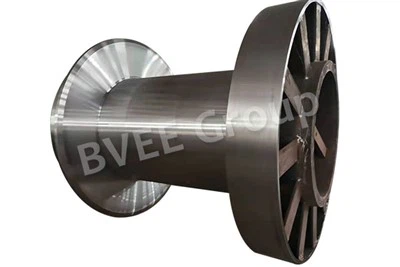
First off, let's talk about what a crane sheave is. A crane sheave is a wheel with a grooved rim that is used to guide and support a rope or cable on a crane. It plays a vital role in the operation of the crane, as it helps to change the direction of the load and transfer the force from the hoist to the load.
Now, why are surface finish requirements important for crane sheaves? Well, the surface finish of a sheave can have a significant impact on its performance and lifespan. A smooth surface finish can reduce friction between the sheave and the rope or cable, which in turn can reduce wear and tear on both components. This can lead to longer service life for the sheave and the rope, as well as improved efficiency and safety of the crane.
On the other hand, a rough or uneven surface finish can cause excessive friction, which can lead to premature wear of the sheave and the rope. This can increase the risk of failure and require more frequent maintenance and replacement of parts. In addition, a rough surface finish can also cause the rope or cable to slip or jump out of the groove, which can be extremely dangerous.
So, what are the specific surface finish requirements for a crane sheave? The requirements can vary depending on several factors, such as the type of crane, the application, the load capacity, and the type of rope or cable being used. However, there are some general guidelines that can be followed.
One of the most important surface finish requirements is the surface roughness. The surface roughness of a sheave is typically measured in microinches (µin) or micrometers (µm). For most crane applications, the surface roughness of the sheave should be between 125 and 250 microinches (3.2 and 6.3 micrometers). This range provides a good balance between reducing friction and providing enough grip for the rope or cable.
Another important surface finish requirement is the roundness of the sheave. The roundness of a sheave refers to how closely the shape of the sheave matches a perfect circle. A sheave that is out of round can cause the rope or cable to wear unevenly and can also lead to vibration and noise during operation. The roundness tolerance for a crane sheave is typically within 0.002 inches (0.05 mm).
In addition to surface roughness and roundness, the surface of the sheave should also be free of any cracks, scratches, or other defects. These defects can cause stress concentrations and can lead to premature failure of the sheave. The surface should also be clean and free of any contaminants, such as dirt, oil, or grease, which can reduce the friction between the sheave and the rope or cable.
Now, let's talk about how we ensure that our crane sheaves meet these surface finish requirements. At our company, we use state-of-the-art manufacturing processes and equipment to produce high-quality crane sheaves. We start with high-quality raw materials, such as forged steel or ductile iron, which are known for their strength and durability.
After the raw materials are selected, we use precision machining techniques to shape the sheave to the desired specifications. This includes turning, milling, and grinding operations to achieve the required surface finish and dimensional accuracy. We also use advanced inspection equipment, such as coordinate measuring machines (CMMs) and surface roughness testers, to ensure that the sheaves meet the strict quality standards.

In addition to our manufacturing processes, we also have a rigorous quality control system in place. Every sheave that we produce is inspected at multiple stages of the manufacturing process to ensure that it meets the surface finish requirements and other quality standards. We also conduct final inspections before the sheaves are shipped to our customers to ensure that they are in perfect condition.
If you're in the market for a crane sheave, I encourage you to consider our Full Forging Sheave. Our full forging sheaves are made from high-quality forged steel, which provides superior strength and durability compared to other types of sheaves. They also have a smooth surface finish that reduces friction and wear, and they are designed to meet the strictest quality standards.
Whether you need a single sheave or a large quantity of sheaves for your crane, we can provide you with the right solution. We offer a wide range of sizes and configurations to meet the needs of different applications, and we can also customize the sheaves to your specific requirements.
If you have any questions or would like to discuss your crane sheave needs, please don't hesitate to contact us. We're here to help you find the best solution for your application and to ensure that you get the highest quality products and service.
In conclusion, the surface finish requirements for a crane sheave are crucial for its performance and lifespan. A smooth surface finish can reduce friction, wear, and the risk of failure, while a rough or uneven surface finish can cause problems and increase the need for maintenance and replacement. By following the general guidelines and using high-quality manufacturing processes and equipment, we can ensure that our crane sheaves meet the strictest surface finish requirements and other quality standards. If you're looking for a reliable and high-quality crane sheave supplier, look no further than us. Contact us today to learn more about our products and services.
References:
- Crane Handbook: Engineering and Operation, Second Edition by C. J. King
- Machinery's Handbook, 31st Edition by Industrial Press Inc.