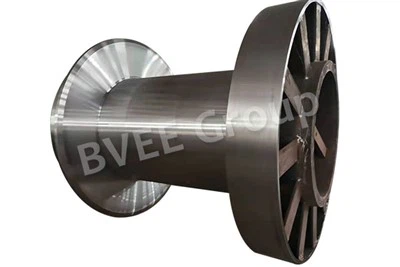
When it comes to the world of wire rope sheaves, one of the most critical factors that often gets overlooked is the hardness requirement. As a leading wire rope sheave supplier, I've seen firsthand the impact that the right - or wrong - hardness can have on the performance and longevity of these essential components. In this blog, we'll delve into what the hardness requirements for a wire rope sheave are, why they matter, and how we ensure our products meet these standards.
Understanding the Basics of Wire Rope Sheaves
Before we dive into the hardness requirements, let's briefly cover what wire rope sheaves are. A wire rope sheave is a grooved wheel that is used in conjunction with a wire rope to change the direction of the rope or to transmit force. They are widely used in various industries, including construction, mining, and maritime, for applications such as cranes, hoists, and elevators.
The interaction between the wire rope and the sheave is constant and involves significant forces. The wire rope moves over the sheave's groove, and any irregularities or improper hardness can lead to premature wear, increased friction, and even failure of the system.
Importance of Hardness in Wire Rope Sheaves
The hardness of a wire rope sheave is crucial for several reasons. Firstly, it affects the wear resistance of the sheave. A sheave with the appropriate hardness can withstand the abrasive action of the wire rope moving over it. If the sheave is too soft, the rope will quickly wear away the surface of the sheave, leading to a shorter lifespan and potentially dangerous situations. On the other hand, if the sheave is too hard, it can cause excessive wear on the wire rope itself, reducing the rope's strength and durability.
Secondly, hardness influences the fatigue resistance of the sheave. In applications where the sheave is subjected to repeated loading and unloading cycles, a sheave with the right hardness can better resist fatigue cracks. Fatigue failure can occur when the material is repeatedly stressed beyond its endurance limit, and a properly hardened sheave can significantly reduce the risk of such failures.
Another important aspect is the ability to maintain the shape of the sheave's groove. The groove of the sheave must have a precise shape to ensure proper seating of the wire rope. A sheave with the correct hardness will retain its groove shape over time, preventing the rope from slipping out or experiencing uneven stress distribution.
Factors Affecting Hardness Requirements
Several factors determine the hardness requirements for a wire rope sheave. The type of wire rope used is one of the primary factors. Different wire ropes have different levels of hardness and abrasiveness. For example, ropes made of high - strength steel may require a harder sheave compared to ropes made of softer materials.
The application and operating conditions also play a significant role. In heavy - duty applications such as STS Crane Forged Sheave, where the sheave is subjected to high loads and frequent use, a higher hardness is generally required. Similarly, in harsh environments with high levels of dust, dirt, or moisture, the sheave needs to be more resistant to wear and corrosion, which can also influence the hardness requirements.
The size and design of the sheave are also important. Larger sheaves may require different hardness levels compared to smaller ones, as they are subjected to different stress distributions. The design of the groove, such as its depth and width, can also affect the hardness requirements, as different groove designs may experience different contact pressures with the wire rope.
Typical Hardness Ranges
The hardness of a wire rope sheave is typically measured using the Rockwell hardness scale (HRC) or the Brinell hardness scale (HB). For most general - purpose wire rope sheaves, the Rockwell hardness range is usually between 30 - 40 HRC. This range provides a good balance between wear resistance and the ability to avoid excessive wear on the wire rope.
In more heavy - duty applications, such as Welding Sheave or Hot Rolling Crane Sheave, the hardness may be increased to 40 - 50 HRC. These higher hardness levels are necessary to withstand the more severe operating conditions and higher loads associated with these applications.
However, it's important to note that these are general guidelines, and the actual hardness requirements should be determined based on a detailed analysis of the specific application, wire rope type, and operating conditions.
How We Ensure Proper Hardness in Our Wire Rope Sheaves
As a wire rope sheave supplier, we take several steps to ensure that our sheaves meet the appropriate hardness requirements. First, we carefully select the raw materials. We use high - quality steels that have the potential to be heat - treated to the desired hardness levels. Our material selection process involves strict quality control measures to ensure the purity and consistency of the steel.


Next, we employ advanced heat - treatment processes. Heat treatment is a critical step in achieving the desired hardness. We use processes such as quenching and tempering to precisely control the hardness of the sheaves. Our heat - treatment facilities are equipped with state - of the - art equipment and are operated by experienced technicians who closely monitor the process parameters to ensure consistent results.
After heat treatment, we conduct thorough hardness testing. We use both non - destructive and destructive testing methods to verify that the sheaves meet the specified hardness requirements. Non - destructive testing methods, such as ultrasonic hardness testing, allow us to quickly and accurately measure the hardness without damaging the sheave. Destructive testing methods, such as hardness testing on test specimens taken from the sheave, provide more detailed information about the internal hardness distribution.
Meeting Customized Hardness Requirements
We understand that different customers may have unique requirements for the hardness of their wire rope sheaves. That's why we offer customized solutions. Whether you need a sheave with a specific hardness for a special application or a unique combination of properties, our engineering team can work with you to develop a solution that meets your exact needs. We have the expertise and capabilities to modify our manufacturing processes and heat - treatment parameters to achieve the desired hardness levels for your specific application.
Conclusion
In conclusion, the hardness requirement for a wire rope sheave is a critical factor that can significantly impact the performance and safety of the entire system. As a wire rope sheave supplier, we are committed to providing high - quality sheaves that meet the appropriate hardness standards. Our focus on material selection, advanced heat - treatment processes, and rigorous testing ensures that our sheaves offer excellent wear resistance, fatigue resistance, and long - term performance.
If you are in the market for wire rope sheaves and have questions about the hardness requirements or need a customized solution, we encourage you to reach out to us. Our team of experts is ready to assist you in selecting the right sheave for your application and guiding you through the procurement process. Contact us today to start a discussion about your wire rope sheave needs and let us help you find the perfect solution.
References
- Machinery's Handbook, 31st Edition
- ASTM Standards on Steel and Metal Hardness Testing
- Technical Papers on Wire Rope and Sheave Design and Performance