Hey there! As a bogie structure supplier, I often get asked about how the coupling systems work in a bogie structure. So, I thought I'd share some insights on this topic.
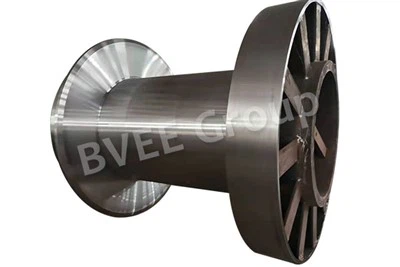
First off, let's talk about what a bogie structure is. A bogie is a crucial part of various types of machinery, especially in cranes like the Bogie Structure. It's basically a framework that holds the wheels and provides support and mobility to the equipment. Now, the coupling systems within a bogie structure play a vital role in ensuring smooth operation.


Coupling systems are used to connect different components of the bogie. They transfer power, torque, and motion from one part to another. There are several types of coupling systems commonly used in bogie structures, and each has its own unique way of working.
One of the most common types is the flexible coupling. Flexible couplings are designed to accommodate misalignments between shafts. In a bogie, there can be small misalignments due to various factors such as manufacturing tolerances, thermal expansion, or vibrations during operation. A flexible coupling can handle these misalignments without causing excessive stress on the connected components.
For example, a jaw coupling is a type of flexible coupling. It consists of two hubs with jaws and an elastomeric spider in between. The spider absorbs shock and vibration, and it allows for a certain amount of angular, parallel, and axial misalignment. When the motor in the Container Gantry Crane Travelling Mechanism rotates, the power is transmitted through the jaw coupling to the shaft of the wheel in the bogie. The elastomeric spider helps to dampen any sudden shocks or vibrations that might occur during the start - stop cycles of the crane.
Another type is the rigid coupling. Rigid couplings are used when precise alignment between shafts is required. They provide a solid connection between two shafts, ensuring that they rotate together as a single unit. In a bogie structure, rigid couplings are often used in situations where the alignment can be maintained accurately during installation and operation. For instance, in some high - precision bogies used in STS And RTG Crane, rigid couplings are used to connect the drive shaft to the gearbox. This ensures that the power is transmitted efficiently without any loss due to misalignment.
Now, let's talk about how the coupling systems interact with other parts of the bogie. The coupling is connected to the motor on one end and the driven component (like a wheel or a gearbox) on the other end. When the motor starts, it generates torque. The coupling transfers this torque to the driven component. The amount of torque that can be transferred depends on the type and size of the coupling.
In addition to torque transfer, coupling systems also help in protecting the motor and other components from damage. For example, if there is a sudden increase in load on the wheel of the bogie, the coupling can act as a safety device. Some couplings are designed to slip or break under excessive load, preventing damage to the motor or the gearbox. This is known as a torque - limiting function.
The maintenance of coupling systems is also an important aspect. Regular inspections are needed to check for signs of wear and tear. For flexible couplings, the elastomeric elements need to be inspected for cracks or deterioration. If the elastomeric part of a jaw coupling is damaged, it can affect the performance of the coupling and lead to increased vibrations and noise in the bogie.
Lubrication is also crucial for some types of couplings. For example, some gear couplings require proper lubrication to reduce friction and wear between the gear teeth. Without proper lubrication, the coupling can overheat, and the gear teeth can wear out quickly, which can ultimately lead to coupling failure.
When it comes to choosing the right coupling system for a bogie structure, several factors need to be considered. The type of load, the speed of operation, the amount of misalignment, and the environment in which the bogie operates are all important factors. For a bogie in a harsh industrial environment with high levels of dust and moisture, a coupling with good sealing properties might be required.
If you're in the market for a bogie structure or need to upgrade your existing coupling systems, I'd be more than happy to help. As a supplier, I have a wide range of bogie structures and coupling systems to meet different needs. Whether you're working on a small - scale project or a large - scale industrial crane, I can provide you with the right solutions.
Contact me if you have any questions or if you're interested in discussing your specific requirements. I'm always ready to have a chat and see how I can assist you in getting the best bogie structure and coupling systems for your project.
References
- "Mechanical Power Transmission" textbooks
- Industry reports on crane and bogie technology