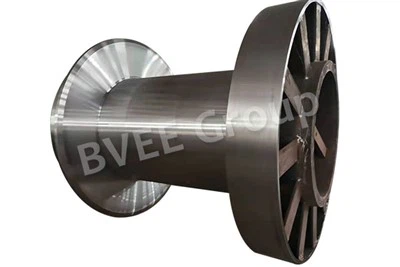
As a seasoned bogie structure supplier, I've witnessed firsthand the critical importance of accurately calculating the load-bearing capacity of bogie structures. This process is not just a technical exercise; it's a fundamental aspect of ensuring the safety, efficiency, and reliability of various industrial applications, from Container Gantry Crane Travelling Mechanism to STS And RTG Crane. In this blog, I'll share insights into how to calculate the load-bearing capacity of bogie structures, drawing on my years of experience in the industry.
Understanding the Basics of Bogie Structures
Before delving into the calculation methods, it's essential to have a clear understanding of what a bogie structure is. A bogie is a framework that supports a vehicle or a piece of equipment, typically consisting of wheels, axles, and a frame. Bogie Structure are designed to distribute the weight of the load evenly across the wheels, allowing for smooth and stable movement.
The load-bearing capacity of a bogie structure refers to the maximum amount of weight it can safely support without experiencing excessive deformation or failure. This capacity is determined by several factors, including the material properties of the bogie components, the design of the structure, and the operating conditions.
Factors Affecting Load-Bearing Capacity
Material Properties
The choice of materials for the bogie structure plays a crucial role in determining its load-bearing capacity. High-strength steels are commonly used due to their excellent mechanical properties, such as high yield strength and toughness. The yield strength of a material is the maximum stress it can withstand before permanent deformation occurs. When calculating the load-bearing capacity, it's important to consider the yield strength of the materials used in the bogie components, such as the frame, axles, and wheels.
Design Considerations
The design of the bogie structure also has a significant impact on its load-bearing capacity. Factors such as the shape and size of the frame, the arrangement of the wheels and axles, and the presence of any reinforcements or stiffeners can all affect how the load is distributed and supported. A well-designed bogie structure will minimize stress concentrations and ensure that the load is evenly distributed across the components.
Operating Conditions
The operating conditions under which the bogie structure will be used must also be taken into account when calculating the load-bearing capacity. Factors such as the type of load (static or dynamic), the frequency of loading, the speed of movement, and the environmental conditions can all affect the performance and durability of the bogie. For example, a bogie operating in a harsh environment with high levels of vibration or corrosion may require a higher load-bearing capacity to ensure long-term reliability.
Calculation Methods
There are several methods available for calculating the load-bearing capacity of bogie structures, ranging from simple hand calculations to complex finite element analysis (FEA). The choice of method depends on the complexity of the structure, the accuracy required, and the available resources.
Hand Calculations
Hand calculations are a quick and easy way to estimate the load-bearing capacity of a bogie structure. These calculations typically involve using basic engineering principles, such as statics and mechanics of materials, to analyze the forces acting on the structure and determine the maximum stress and deformation. While hand calculations are relatively simple and can provide a good estimate of the load-bearing capacity, they may not be suitable for complex structures or situations where high accuracy is required.
Finite Element Analysis (FEA)
Finite element analysis is a more advanced method for calculating the load-bearing capacity of bogie structures. FEA involves dividing the structure into a finite number of small elements and using numerical methods to solve the equations of motion and equilibrium for each element. This allows for a more detailed and accurate analysis of the stress and deformation distribution within the structure. FEA can also take into account factors such as material nonlinearity, geometric nonlinearity, and dynamic loading, making it a powerful tool for designing and optimizing bogie structures.
Step-by-Step Calculation Process
Step 1: Define the Load
The first step in calculating the load-bearing capacity of a bogie structure is to define the load that it will be required to support. This includes determining the magnitude, direction, and distribution of the load. The load can be either static or dynamic, and it may include factors such as the weight of the vehicle or equipment, the payload, and any additional loads due to acceleration, deceleration, or vibration.
Step 2: Analyze the Structure
Once the load has been defined, the next step is to analyze the structure to determine how the load will be distributed and supported. This involves identifying the critical components of the bogie structure, such as the frame, axles, and wheels, and analyzing the forces acting on each component. The analysis can be performed using hand calculations or FEA, depending on the complexity of the structure.
Step 3: Determine the Material Properties
The material properties of the bogie components must also be determined in order to calculate the load-bearing capacity. This includes the yield strength, ultimate strength, modulus of elasticity, and Poisson's ratio of the materials used. These properties can be obtained from material specifications or by conducting material testing.
Step 4: Calculate the Stress and Deformation
Using the load analysis and material properties, the next step is to calculate the stress and deformation in the bogie components. This can be done using equations from mechanics of materials or by using FEA software. The calculated stress and deformation should be compared to the allowable stress and deformation limits for the materials used to ensure that the structure is safe and reliable.
Step 5: Check for Safety
Once the stress and deformation have been calculated, the final step is to check for safety. This involves comparing the calculated stress and deformation to the allowable limits and ensuring that the structure has an adequate factor of safety. The factor of safety is a measure of how much stronger the structure is than the minimum required to support the load. A higher factor of safety provides a greater margin of safety and reduces the risk of failure.
Importance of Accurate Calculation
Accurately calculating the load-bearing capacity of bogie structures is essential for ensuring the safety, efficiency, and reliability of industrial applications. A bogie structure that is over-designed may be more expensive and heavier than necessary, while a bogie structure that is under-designed may be at risk of failure, which can lead to costly downtime, equipment damage, and even injury or loss of life.
By accurately calculating the load-bearing capacity, engineers can optimize the design of the bogie structure to ensure that it meets the specific requirements of the application while minimizing cost and weight. This can result in significant savings in terms of both initial investment and long-term operating costs.
Conclusion
Calculating the load-bearing capacity of bogie structures is a complex but essential process that requires a thorough understanding of engineering principles, material properties, and operating conditions. By considering the factors affecting load-bearing capacity, using appropriate calculation methods, and following a step-by-step calculation process, engineers can accurately determine the maximum weight that a bogie structure can safely support.
As a bogie structure supplier, I understand the importance of providing high-quality products that meet the specific needs of our customers. If you're in need of a reliable and efficient bogie structure for your industrial application, I encourage you to contact us to discuss your requirements. Our team of experienced engineers will work with you to design and manufacture a bogie structure that meets your exact specifications and provides the highest level of performance and reliability.


References
- [1] Shigley, J. E., & Mischke, C. R. (2001). Mechanical Engineering Design. McGraw-Hill.
- [2] Timoshenko, S. P., & Goodier, J. N. (1970). Theory of Elasticity. McGraw-Hill.
- [3] Cook, R. D., Malkus, D. S., Plesha, M. E., & Witt, R. J. (2002). Concepts and Applications of Finite Element Analysis. Wiley.